
Happy Present Meet
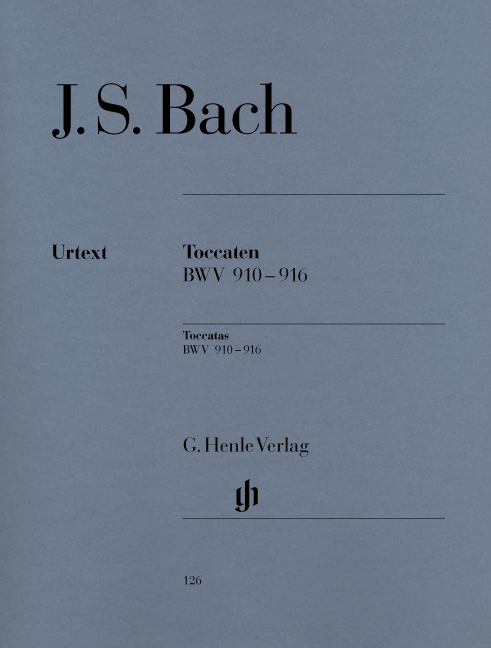
Bach Toccatas BWV 910-916 for Piano Solo
J. S. 바흐 토카타 BWV 910-916 피아노 독주(솔로)
악기 구성
Piano Solo 피아노 독주(솔로)
Rudolf Steglich (Editor) 루돌프 슈테글리히
Hans-Martin Theopold (Fingering Piano) 한스마르틴 테오폴트
Urtext Edition, paperbound
Pages 95 (V+90)
Content
Toccata f# minor BWV 910 토카타 f#단조
7 difficult
Toccata c minor BWV 911 토카타 c단조
7 difficult
Toccata D major BWV 912 토카타 D장조
7 difficult
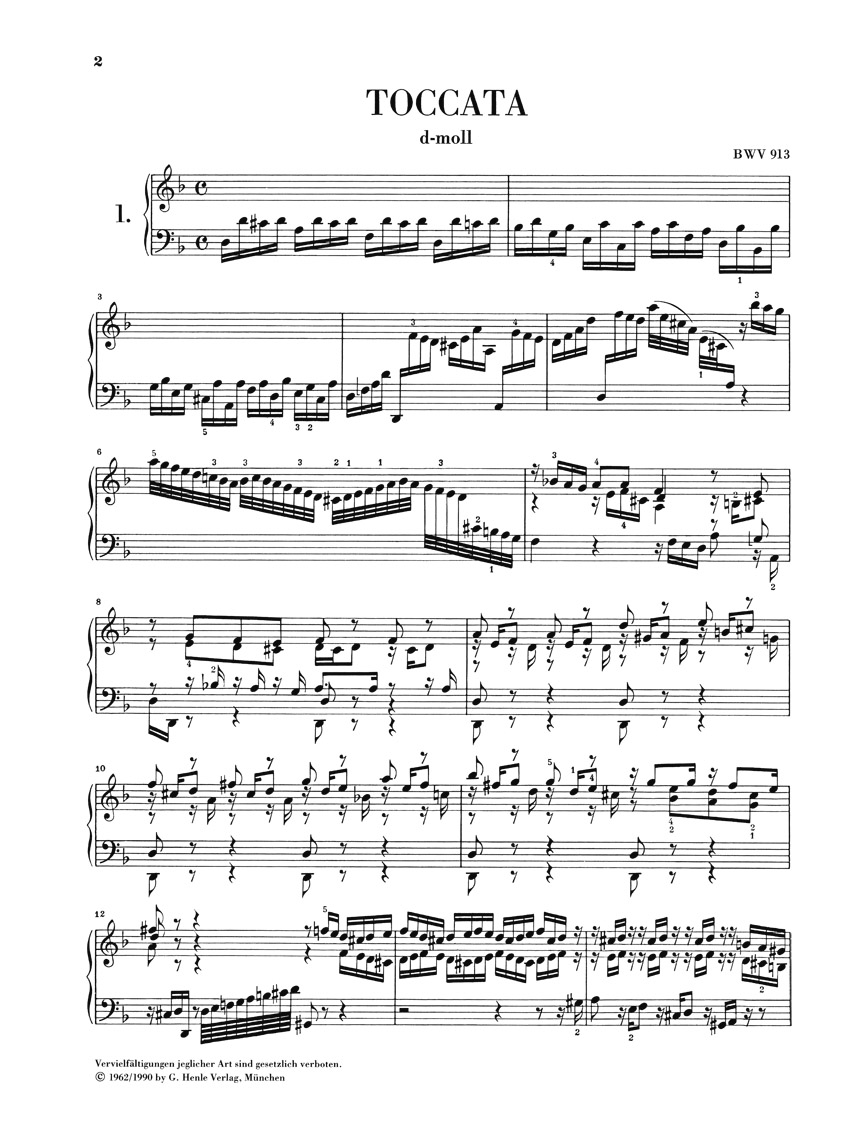
Toccata d minor BWV 913 토카타 d단조
6 medium
Toccata e minor BWV 914 토카타 e단조
6 medium
Toccata g minor BWV 915 토카타 g단조
7 difficult
Toccata G major BWV 916 토카타 G장조
6 medium
Bach most likely composed his Toccatas in his early creative years, between 1707 and 1713; they can be seen as the products of Bach‘s own “Sturm und Drang” period, and were not planned as an interconnected work cycle, but as autonomous works written at different times. As was customary for this genre, the toccatas emphasize virtuoso and improvisatory elements, and, occasionally, the recitative aspect as well. What is indispensable is Bach’s mastery of the polyphonic technique, the rich harmonies, and the inexhaustible wealth of his inventiveness.
바흐는 토카타를 아마도 창작 초기인 1707년에서 1713년 사이에 작곡했을 것입니다. 이 곡들은 바흐 자신의 「질풍노도(Sturm und Drang)」 시기의 산물로 볼 수 있으며, 서로 연결된 연작으로 계획된 것이 아니라 각기 다른 시기에 쓰인 독립된 작품입니다. 이 장르의 관례대로 토카타는 비르투오소적이고 즉흥적인 요소를, 때로는 레치타티보적인 면모도 강조합니다. 빼놓을 수 없는 것은 다성 기법에 대한 바흐의 통달, 풍부한 화성, 그리고 무궁무진한 창의성입니다.
작곡가 Bach, Johann Sebastian (1685-1750)
에디터 Steglich, Rudolf
Liszt Annees de Pelerinage, Deuxiee Anne Italie for Piano Solo (순례해 2년)
Beethoven Piano Concerto No.3 in c minor Op.37 for 2 Pianos 4 Hands
Rachmaninoff Piano Sonata No.2 Op.36 (1913 and 1931) for Piano Solo
파데레프스키편 제5권 : 쇼팽 스케르초 (Paderewski : Chopin Scherzos)
Moszkowski 15 Etudes de Virtuosite Op.72 for Piano Solo
Chopin Scherzo in b minor Op.20 for Piano Solo
Liszt Annees de Pelerinage, Premiee Anne Suisse for Piano Solo (순례해 1년)