Happy Present Meet
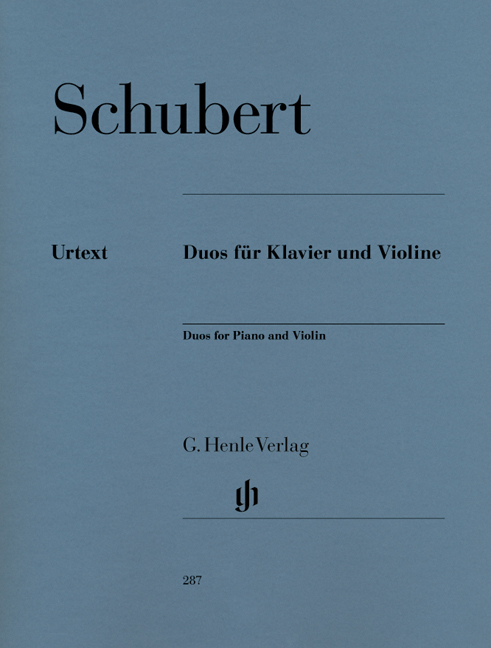
Schubert Fantasy, Rondo, Sonata for Violin and Piano
슈베르트 피아노와 바이올린을 위한 이중주곡 바이올린과 피아노
악기 구성
Violin and Piano 바이올린과 피아노
Ernst Herttrich (Editor) 에른스트 헤르트리히
Hans-Martin Theopold (Fingering Piano) 한스마르틴 테오폴트
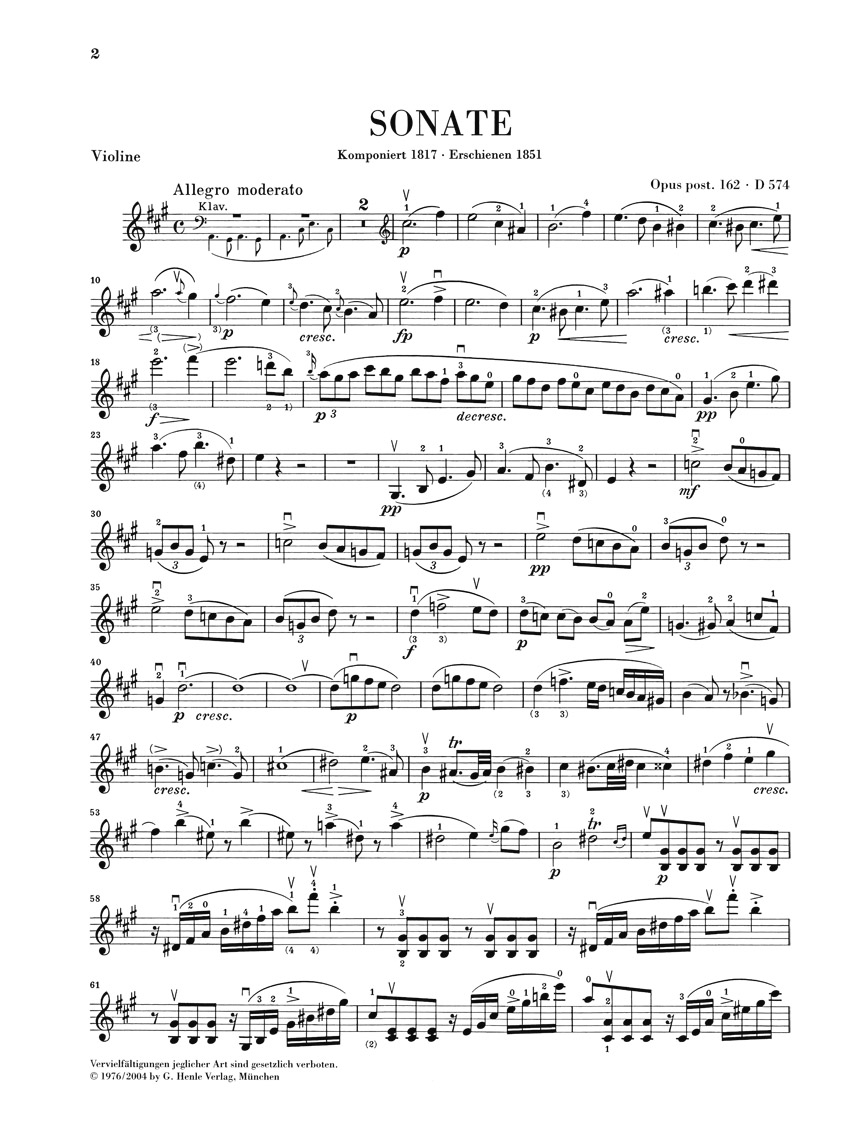
Max Rostal (Fingering and bowing for Violin) 막스 로스탈
Urtext Edition, paperbound
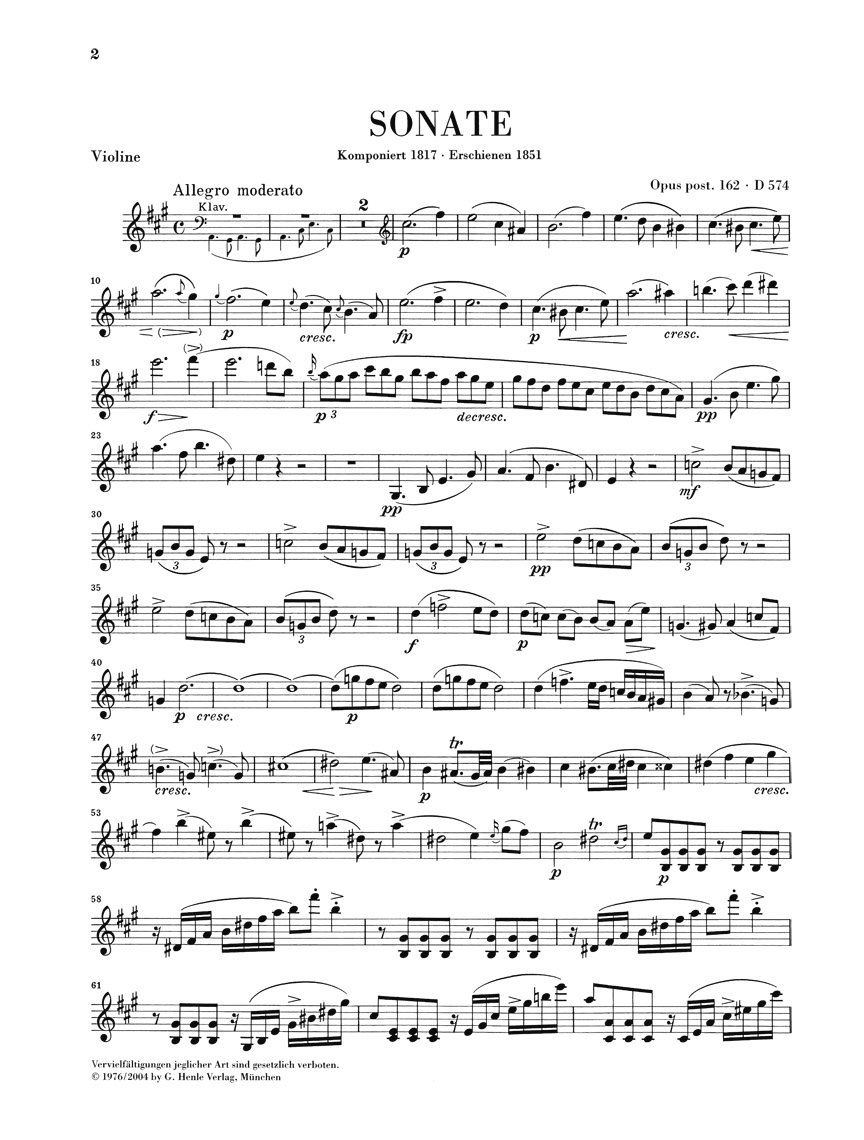
with marked and unmarked string parts
Pages 155 (V+86+32+32)
Content
Rondo b minor Op.70 D 895 론도 b단조
7 difficult
Fantasy C major Op. post. 159 D 934 환상곡 C장조
8 difficult
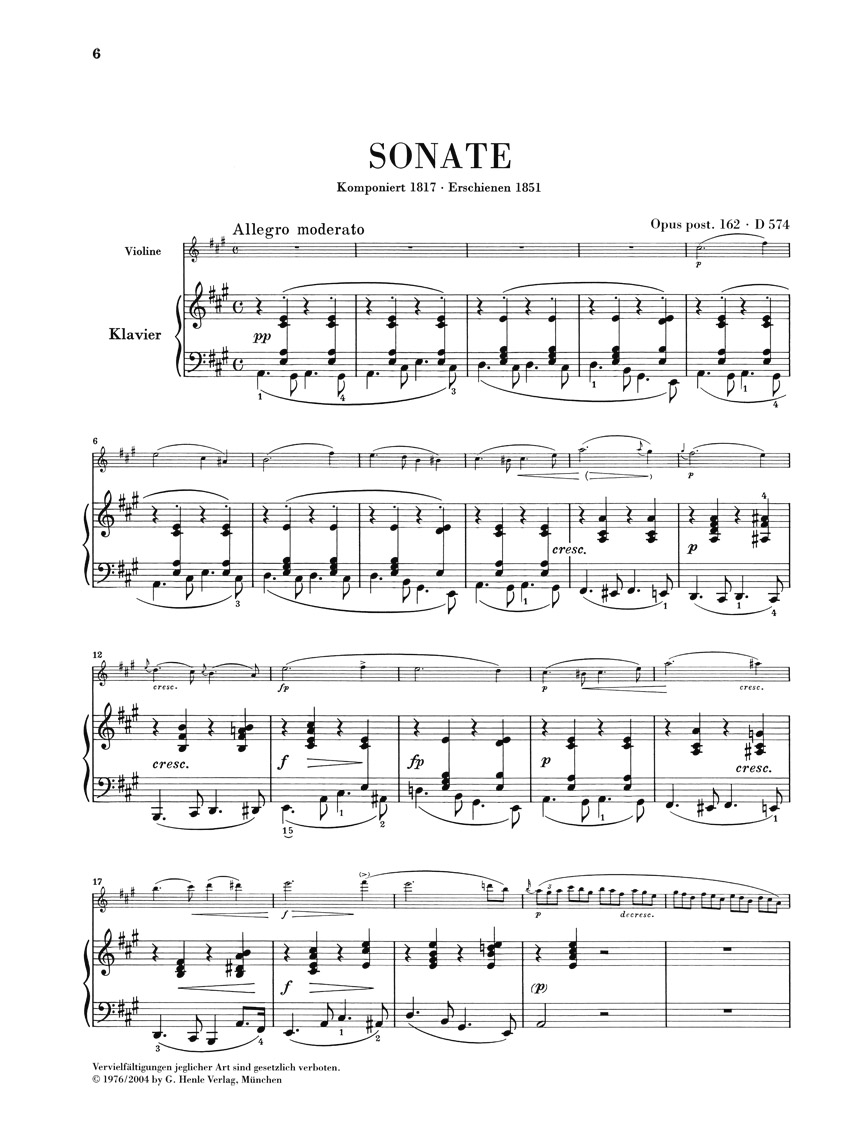
Violin Sonata A major Op. post. 162 D 574 바이올린 소나타 A장조
6 medium
Schubert’s three grand duos for violin and piano occupy pride of place among his foremost works. In the A major Sonata D 574 of summer 1817 he continued to elaborate what was still a simple interplay of the violin and piano in the violin sonatinas (see HN 6) and reached his greatest mastery here. He increased the intensity of his writing into genuine virtuosity in the b minor Rondo D 895 composed in late 1826. The critics of Schubert’s day were already praising “the bold master of harmony” and “the fiery fantasy” of the piece. In the Fantasie in C major D 934, written one year later, Schubert brackets an Andantino with Variations on the song “Sei mir gegrusst” D 741 with sections that are tastefully interwoven with the theme of the lied.
슈베르트의 바이올린과 피아노를 위한 대규모 이중주 세 곡은 그의 대표작 가운데서도 으뜸가는 자리를 차지합니다. 1817년 여름의 A장조 소나타 D 574에서 그는 바이올린 소나티네(HN 6 참조)에서는 아직 단순했던 바이올린과 피아노의 상호작용을 더욱 발전시켜 최고의 경지에 이르렀습니다. 1826년 말에 작곡한 b단조 론도 D 895에서는 작법의 강도를 높여 진정한 비르투오소 양식에 이르렀습니다. 슈베르트 당대의 비평가들은 이미 이 곡의 「대담한 화성의 대가」와 「불같은 환상」을 칭송했습니다. 1년 뒤에 쓴 C장조 환상곡 D 934에서 슈베르트는 가곡 「인사를 보내리(Sei mir gegrusst)」 D 741에 의한 안단티노와 변주곡을, 가곡의 주제가 멋지게 엮인 부분들로 감쌌습니다.
작곡가 Schubert, Franz (1797-1828)
에디터 Herttrich, Ernst