
Happy Present Meet

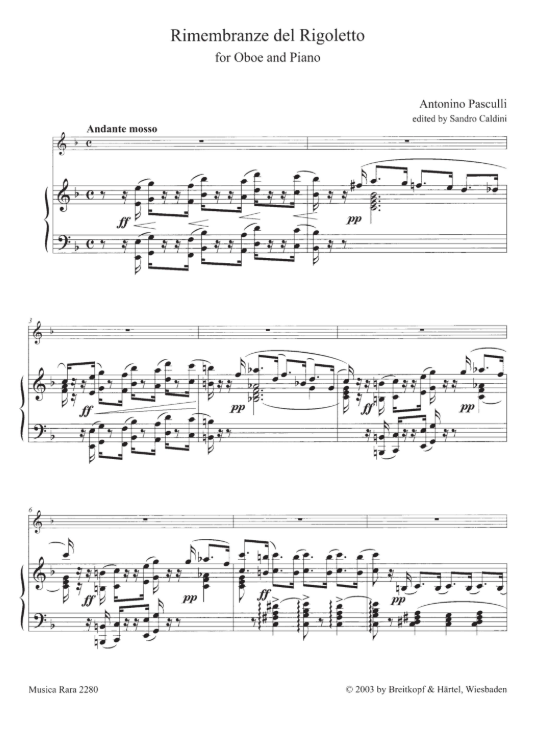
Pasculli Rimembranze del Rigoletto di Verdi for Oboe and Piano
안토니오 파스쿨리 베르디의 리골레토의 추억 - 오보에와 피아노를 위한
First Printing edited by Sandro Caldini - 산드로 칼디니
과거 유실되거나 손상되었던 파스쿨리의 친필 악보와 초기 인쇄본을 바탕으로, 현대 오보에 연주자들이 연주하기 가장 정확하고 깔끔하게 교정된 에디션입니다
Rimembranze del “Rigoletto” di Verdi
Publisher: Musica RaRa
MR 2280 | ISMN: 979-0-004-48831-7
32 pages | 23 x 30,5 cm | 146 g | Saddle Stitch
이악보는 오보에 음악 역사에서 손에 꼽히는 최고 난이도의 비르투오소(Virtuoso) 독주 악보입니다.
'오보에의 파가니니'가 쓴 초절기교
• 오페라 판타지 스타일: 19세기 이탈리아에서 유행했던 스타일로, 주세페 베르디의 유명 오페라 《리골레토》의 주요 아리아와 멜로디를 가져와 화려한 독주곡으로 재구성했습니다.
• 한계를 시험하는 테크닉: 작곡가 본인이 뛰어난 오보에 연주자였던 만큼, 악보 전체에 쉬지 않고 몰아치는 빠른 패시지, 넓은 음역대를 넘나드는 도약, 복잡한 장식음과 카덴차가 가득합니다.
• 순환 호흡(Circular Breathing)의 필수성: 음과 음 사이에 숨을 쉴 틈이 거의 없도록 빽빽하게 음표가 나열되어 있어, 연주자에게 끊임없이 숨을 쉬며 연주하는 고난도의 기술을 요구합니다.
곡은 오페라 《리골레토》의 핵심적인 세 가지 테마를 중심으로 전개됩니다.
• 서주 (Introduction): 오페라 1막에 등장하는 바람둥이 공작의 유명한 발라타 *'이 여자나 저 여자나 (Questa o quella)'*의 멜로디로 화려하게 포문을 엽니다.
• 중간부 (Cantabile): 리골레토의 딸 질다가 부르는 사랑의 아리아 *'그리운 이름이여 (Caro nome)'*의 아름답고 서정적인 선율을 오보에 특유의 애절한 음색으로 변주합니다.
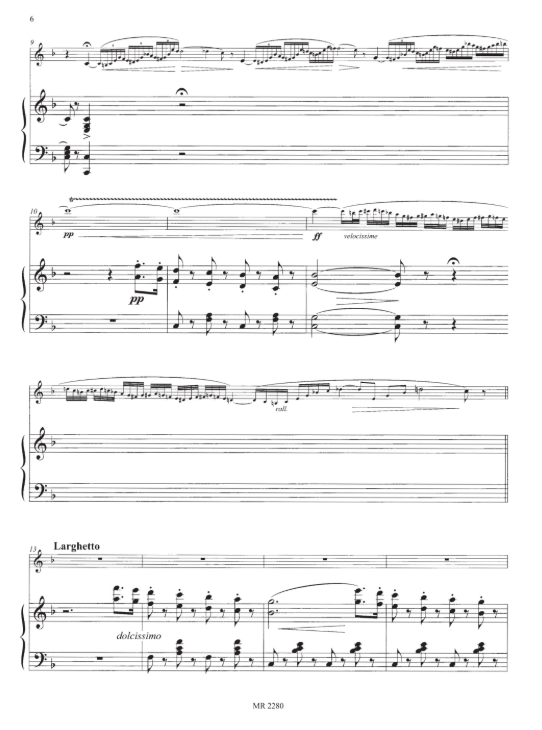
• 종지부 (Finale): 그 유명한 아리아 *'여자의 마음 (La donna è mobile)'*의 경쾌한 테마를 바탕으로, 오보에의 기교를 극한까지 끌어올리는 화려한 변주(Variation)와 카덴차가 이어지며 압도적인 분위기로 곡을 끝맺습니다
The present edition is based on the manuscript n.33B28f kindly provided by the Library of the Conservatory of Music in Palermo. Although it is undated, its writing gives us cause to believe that it is one of his early works. Another important characteristic is the similarity of this composition with Giovanni Daelli’s Fantasia su Rigoletto for oboe and piano published in 1855 by Ricordi; over half of the present edition presents the same score as Daelli’s work, which makes it obvious that Pasculli was deeply inspired by it. After a short piano introduction, an oboe cadenza (as in the majority of the Pasculli’s works) leads to the first aria (sung by Gilda, in the opera) “Caro nome” followed by some variations separated from each other by an oboe cadenza. This entire part is very similar – if not identical – to Daelli’s Fantasia. The introduction of the Duke’s aria “Bella figlia dell’amore” (with a challenging variation) then leads to the final Allegro con fuoco.
In my editorial work, I attempted to follow the manuscript and to only correct the inconsistencies and errors in slurs and harmony:
m. 31 Piano part left hand, the 3rd eighth note is an f and the last eighth note is missing in the manuscript.
m. 36 Piano part left hand, on the 3rd beat the manuscript has a quarter rest.
m. 48 Piano part right hand, the last trill presents a c natural2 in the manuscript.
m. 54 Oboe part, the crescendo is missing in the manuscript.
m. 134 Piano part left hand, the 6th and 7th sixteenths notes (chords) have an e sharp1 and a g natural1 in the manuscript.
m. 137 Oboe part, the first 32nd note after the trill is natural in the manuscript.
m. 139 Piano part right and left hands, in the chords the b are natural in the manuscript.
The piano part and the harmony were checked by Fulvio Caldini.
Florence, Fall 2003
편곡자 Caldini, Sandro
작곡가 Pasculli, Antonino (1842-1924)
Verdi, Giuseppe (1813-1901)
[특가상품] Schumann Sonata No.1 in a minor Op.105 for Oboe (or Flute) and Piano
Pasculli Galopade for Oboe and Piano
[특가상품] Silvestrini Aloe for Oboe and Piano
[통신판매]입금결제(단체주문,퀵착불,인터넷,매장방문입금)
Carter Inner Song for Oboe Solo from Trilogy
Haydn Concerto in C Major Hob.VIIg:C1 for Oboe and Piano
Schumann 3 Romances Op.94 for Oboe and Piano
Hindemith Sonata (1938) for Oboe and Piano
Lebrun Concerto No.1 in d minor for Oboe and Piano
Dorati Cinq (5) Pieces Pour Le Hautbois - Five Pieces for the Oboe Solo