
Happy Present Meet
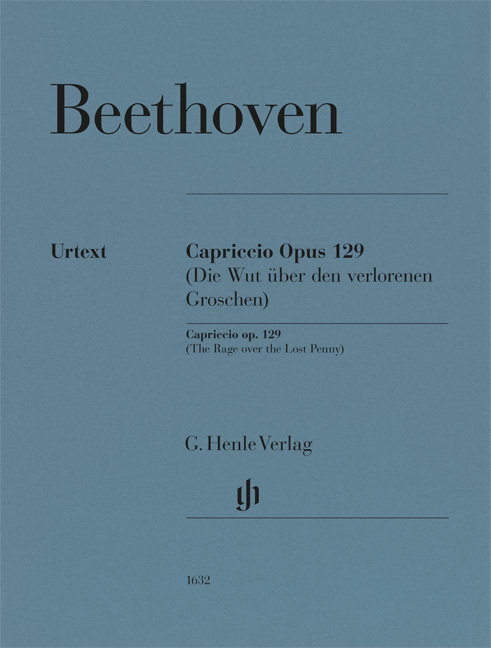
Beethoven Alla Ingharese quasi un Capriccio in G major Op.129 for Piano Solo
베토벤 알라 잉가레제 콰지 우나 카프리치오 G장조 Op.129 「잃어버린 동전에 대한 분노」 피아노 독주(솔로)
악기 구성
Piano Solo 피아노 독주(솔로)
Joanna Cobb Biermann (Editor) 조안나 콥 비어만
Haochen Zhang (Fingering Piano) 장하오천
Urtext Edition, paperbound
Pages 22 (V+17)
Content
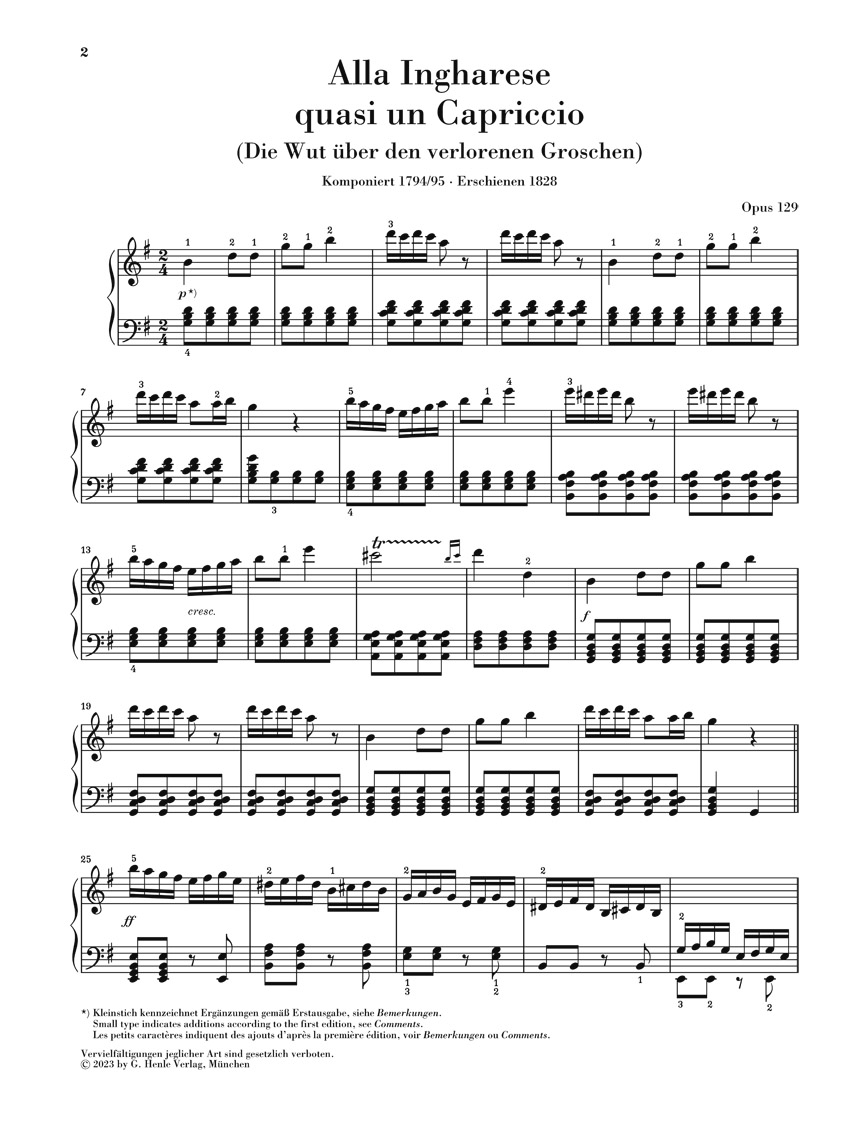
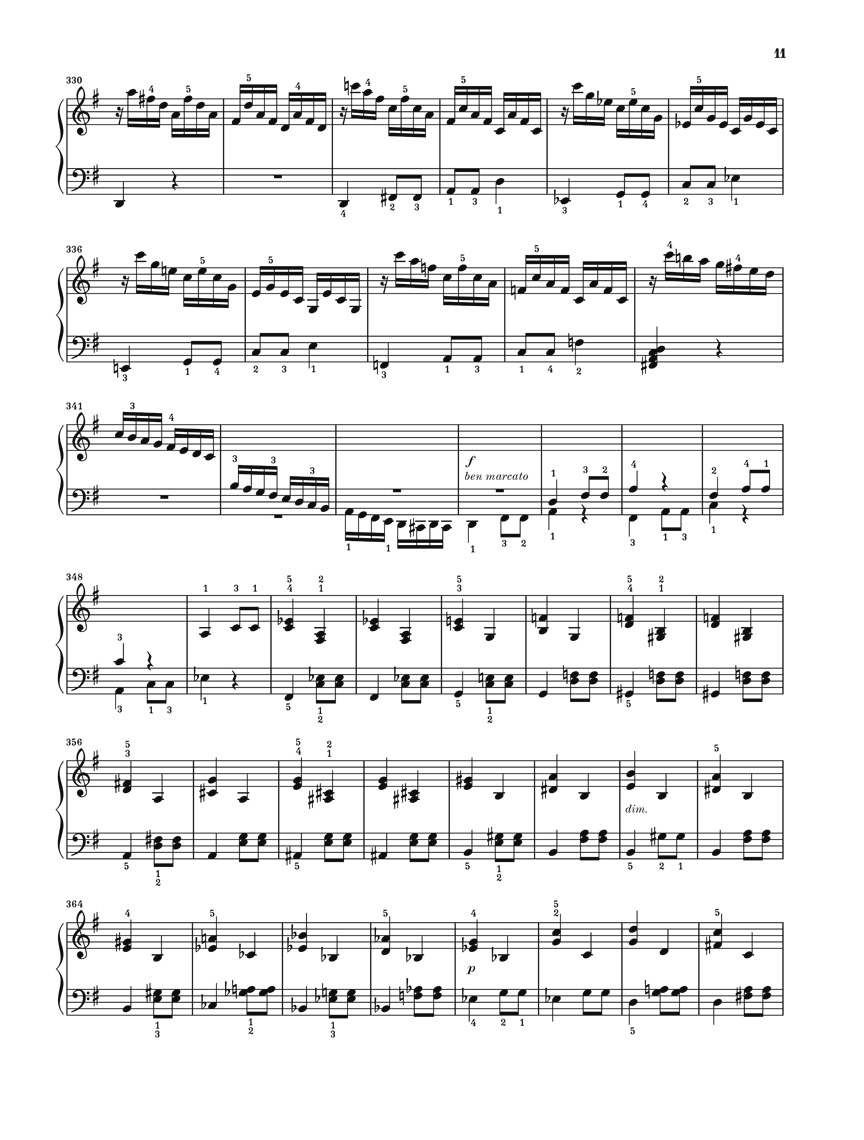
Alla Ingharese quasi un Capriccio G major Op.129 알라 잉가레제 콰지 운 카프리초 G장조 (The Rage over the Lost Penny, 잃어버린 동전에 대한 분노)
7 difficult
This rondo for piano was composed in 1794/95 and has become known primarily by its sobriquet “The rage over the lost penny”. However, this did not originate with the composer himself, but rather added to the autograph later by another hand. In his own original title, Beethoven emphasised its “Hungarian” style, though he wrote “Ingharese” instead of “all’ungharese”, thereby emphasising the humorous nature of this spirited piece. Robert Schumann aptly remarked that “There can hardly be anything more amusing than this little tale. I had to laugh from the beginning to the end when I played it for the first time recently”.
Beethoven specialist Joanna Cobb Biermann was responsible for revising the Urtext edition of this popular work in line with the latest research, while Chinese pianist Haochen Zhang provided his own fingerings for it.
이 피아노 론도는 1794/95년에 작곡되었으며, 주로 「잃어버린 동전에 대한 분노」라는 별칭으로 알려져 있습니다. 그러나 이 별칭은 작곡가가 붙인 것이 아니라 나중에 다른 사람이 자필 악보에 덧붙인 것입니다. 베토벤은 자신이 붙인 원래 제목에서 이 곡의 “헝가리” 양식을 강조했는데, “all’ungharese” 대신 “Ingharese”라고 써서 활기찬 이 곡의 유머러스한 성격을 부각했습니다. 로베르트 슈만은 “이 작은 이야기보다 더 재미있는 것은 거의 없을 것이다. 최근 처음 연주했을 때 처음부터 끝까지 웃지 않을 수 없었다”라고 적절히 평했습니다.
베토벤 전문가 조안나 콥 비어만이 이 인기 작품의 원전판을 최신 연구에 맞춰 개정했고, 중국 피아니스트 장하오천이 직접 운지법을 붙였습니다.
작곡가 Beethoven, Ludwig Van (1770-1827)
에디터 Joanna Cobb Biermann
Rachmaninoff : Sonata No.1 And Other Works for Solo Piano
*Bach The Well-Tempered Clavier BWV 846-869 BK.1 for Piano Solo (평균율1)
*Bach The Well-Tempered Clavier BWV 870-893 BK.2 for Piano Solo (평균율2)
Schumann Humoresque in Bb major Op.20 for Piano Solo