
Happy Present Meet
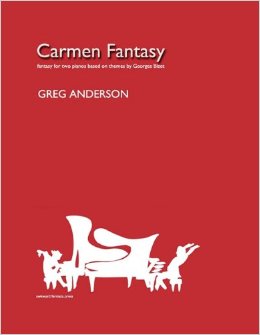
Anderson & Roe Carmen Fantasy By Bizet for 2 Pianos 4 Hands
앤더슨 & 로 편곡, 비제의 '카르멘 환상곡' (2대의 피아노를 위한 4손)
advanced 고급
A concert fantasy in the grand romantic tradition, the Carmen Fantasy for Two Pianos weaves together several distinct scenes from Georges Bizet's beloved opera Carmen. Serving as an introduction, the work begins with the "Danse Bohémienne" from Act IV, a ballet that is almost always cut from modern performances of the opera. (Incidentally, Bizet used the same material as incidental music to L'Arlésienne.) The introduction is followed by the "Aragonaise" (originally the entr’acte to Act IV, a scene just before the opera’s climactic bullfight), the famous "Habanera" from Act I (in which Carmen sings “L’amour est un oiseau rebelle,” or, “Love is a rebellious bird"), and the "Card Aria" from Act III (in which Carmen reads in the cards that both she and Don José are doomed to die). Following the terrifying omen of death, the music cuts to the "Flower Song" from Act II, a scene that epitomizes that love Don José and Carmen once shared for one another. Ultimately, the juxtaposition serves to highlight the tragedy of the opera without actually recreating the opera's climactic recitative (in which Don José murders his former lover, Carmen). The fantasy concludes with a party scene from the beginning of Act II, in which Carmen and her friends entertain army officer with a song about gypsy girls (much like themselves). The music accelerates in a whirlwind of fevered rhythm, Basque tambourins, and ecstatic dance.
낭만주의 전통을 계승한 ‘두 대의 피아노를 위한 카르멘 환상곡’은 조르주 비제의 오페라 ‘카르멘’ 속 주요 장면들을 하나로 엮어낸 작품입니다. 도입부에는 오늘날 오페라 공연에서는 거의 생략되는 제4막의 발레곡 ‘보헤미안 춤(Danse Bohémienne)’이 등장합니다(참고로 비제는 이 선율을 ‘아를의 여인’을 위한 부수 음악으로도 사용했습니다). 이어 제4막의 간주곡이자 오페라의 절정인 투우 장면 직전에 나오는 ‘아라고네즈(Aragonaise)’, 제1막에서 카르멘이 “사랑은 반항적인 새와 같아(L’amour est un oiseau rebelle)”라고 노래하는 유명한 ‘하바네라(Habanera)’, 그리고 제3막에서 카르멘이 카드 점을 통해 자신과 돈 호세 모두 죽음을 피할 수 없는 운명임을 읽어내는 ‘카드 아리아(Card Aria)’가 차례로 펼쳐집니다. 죽음의 불길한 징조 뒤에는 제2막의 ‘꽃의 노래(Flower Song)’가 이어지는데, 이 장면은 한때 돈 호세와 카르멘이 서로 나누었던 사랑을 상징적으로 보여줍니다. 이러한 구성은 오페라의 절정에서 돈 호세가 옛 연인 카르멘을 살해하는 장면을 직접 재현하지 않고도, 작품 전체의 비극성을 강렬하게 부각합니다. 환상곡은 제2막 도입부의 파티 장면으로 마무리되는데, 여기서 카르멘과 그녀의 친구들은 자신들과 같은 집시 여인들에 관한 노래를 부르며 군 장교들을 즐겁게 합니다. 음악은 열정적인 리듬과 바스크식 탬버린 소리, 그리고 황홀한 춤이 어우러진 회오리바람처럼 점점 더 격렬하게 고조됩니다.
편곡자 Anderson, Greg
작곡가 Bizet, Georges (1838-1875)
Anderson, Greg
Brahms Intermezzo in A major Op.118 No.2 for Piano Solo
Bennett 4 Piece Suite for 2 Pianos 4 Hands
Rosenblatt Carmen Fantasy on themes from the Opera by Bizet for 2 Pianos 4 Hands
Chopin Ballades for Piano Solo #01 - National Edition (ed. J. Ekier)
파데레프스키편 제8권 : 쇼팽 폴로네이즈 (Paderewski : Chopin Polonaises)
Anderson & Roe - Strauss Blue Danube Fantasy for Piano 4 Hands