Happy Present Meet
Ravel Tzigane for Violin and Piano
라벨 치간느 바이올린과 피아노
악기 구성
Violin and Piano 바이올린과 피아노
Jean-Francois Monnard (Editor) 장프랑수아 모나르
Pascal Rogé (Fingering Piano) 파스칼 로제
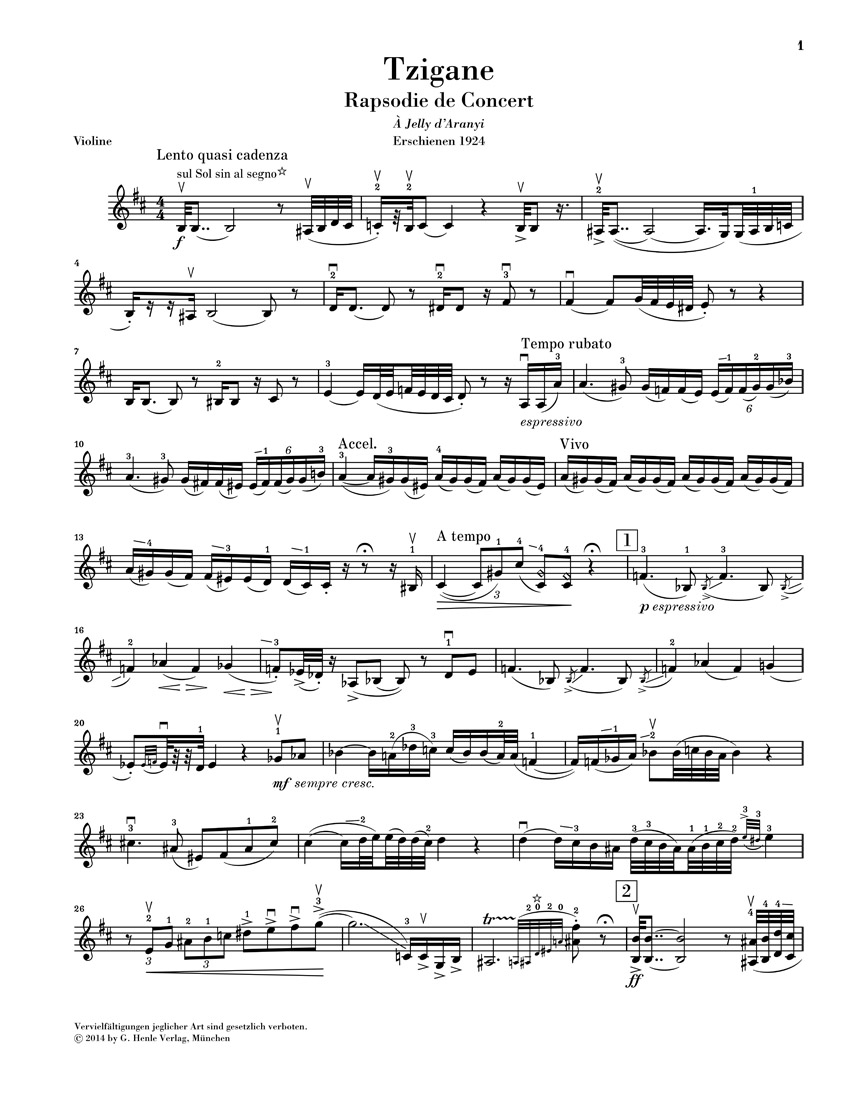
Frank Peter Zimmermann (Fingering and bowing for Violin) 프랑크 페터 짐머만
Urtext Edition, paperbound
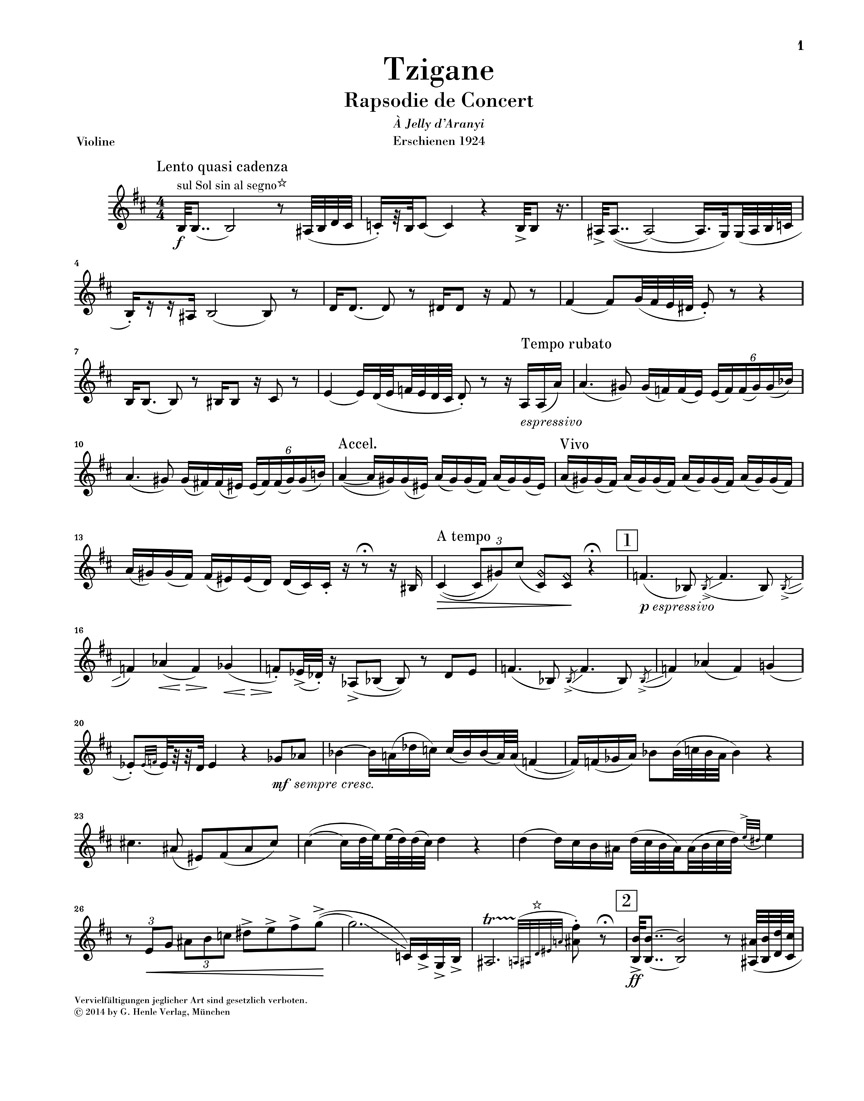
with marked and unmarked string part
Pages 42 (V+19+9+9)
Content
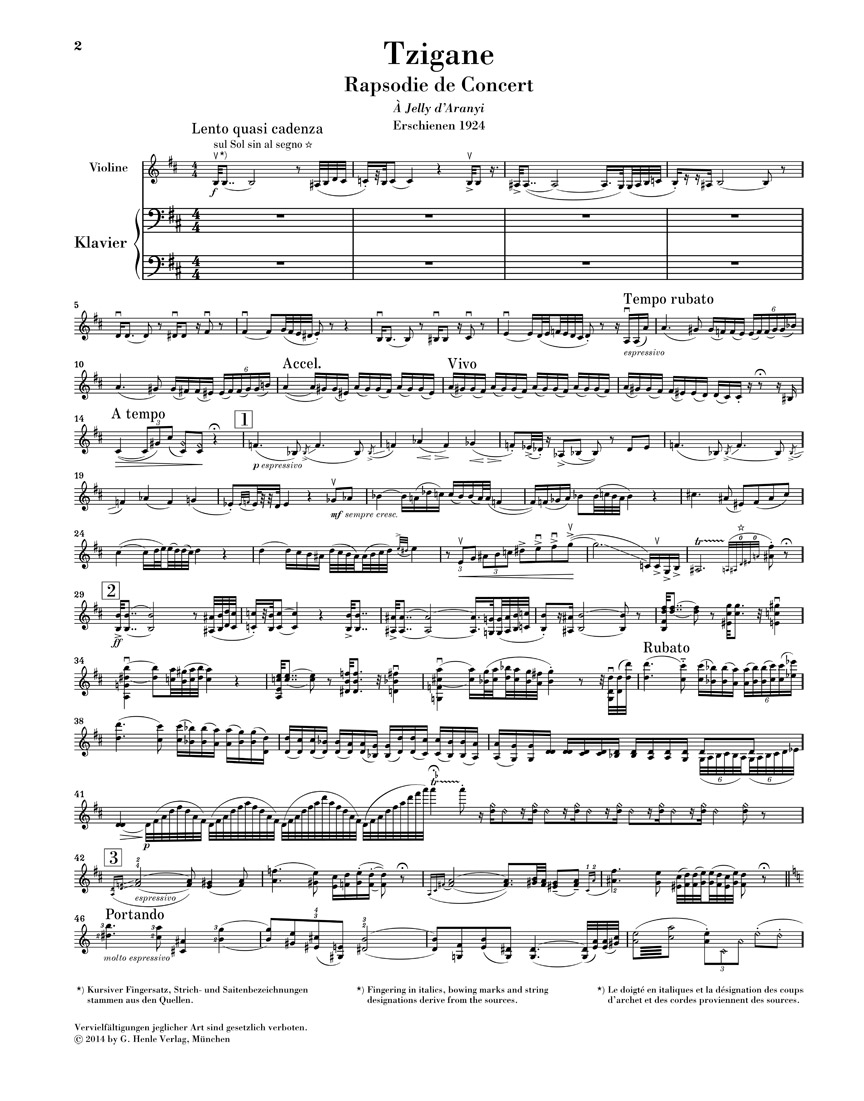
Tzigane 치간
8 difficult
“Virtuoso piece in the style of a Hungarian rhapsody” – thus reads Ravel’s entry on “Tzigane” in the so-called “Autobiographical Sketch”. Composed in 1924, there are three versions of this work: with piano, with orchestra and with luthéal, a device for keyboard instruments to extend the timbre. “Tzigane” was inspired by the Hungarian-English violinist Jelly d’Aranyi, to whom Ravel had already promised a virtuoso piece in 1922 following Franz Liszt’s “Hungarian Rhapsodies”. Work progressed slowly and d’Aranyi only received the music four days before the première – but she still gave a brilliant performance.
“헝가리 광시곡 양식의 비르투오소 작품” — 이른바 「자전적 스케치」에서 라벨은 「치간」을 이렇게 적었습니다. 1924년에 작곡된 이 작품에는 피아노 반주, 오케스트라 반주, 그리고 건반 악기의 음색을 넓히는 장치인 뤼테알을 쓰는 세 가지 버전이 있습니다. 「치간」은 헝가리 출신 영국 바이올리니스트 옐리 다라니에게서 영감을 받은 작품으로, 라벨은 이미 1922년에 프란츠 리스트의 「헝가리 광시곡」을 본뜬 비르투오소 작품을 그녀에게 약속했습니다. 작업은 더디게 진행되어 다라니는 초연 나흘 전에야 악보를 받았지만, 그럼에도 훌륭하게 연주해 냈습니다.
작곡가 Ravel, Maurice (1875-1937)
에디터 Monnard, Jean-Francois