
Happy Present Meet
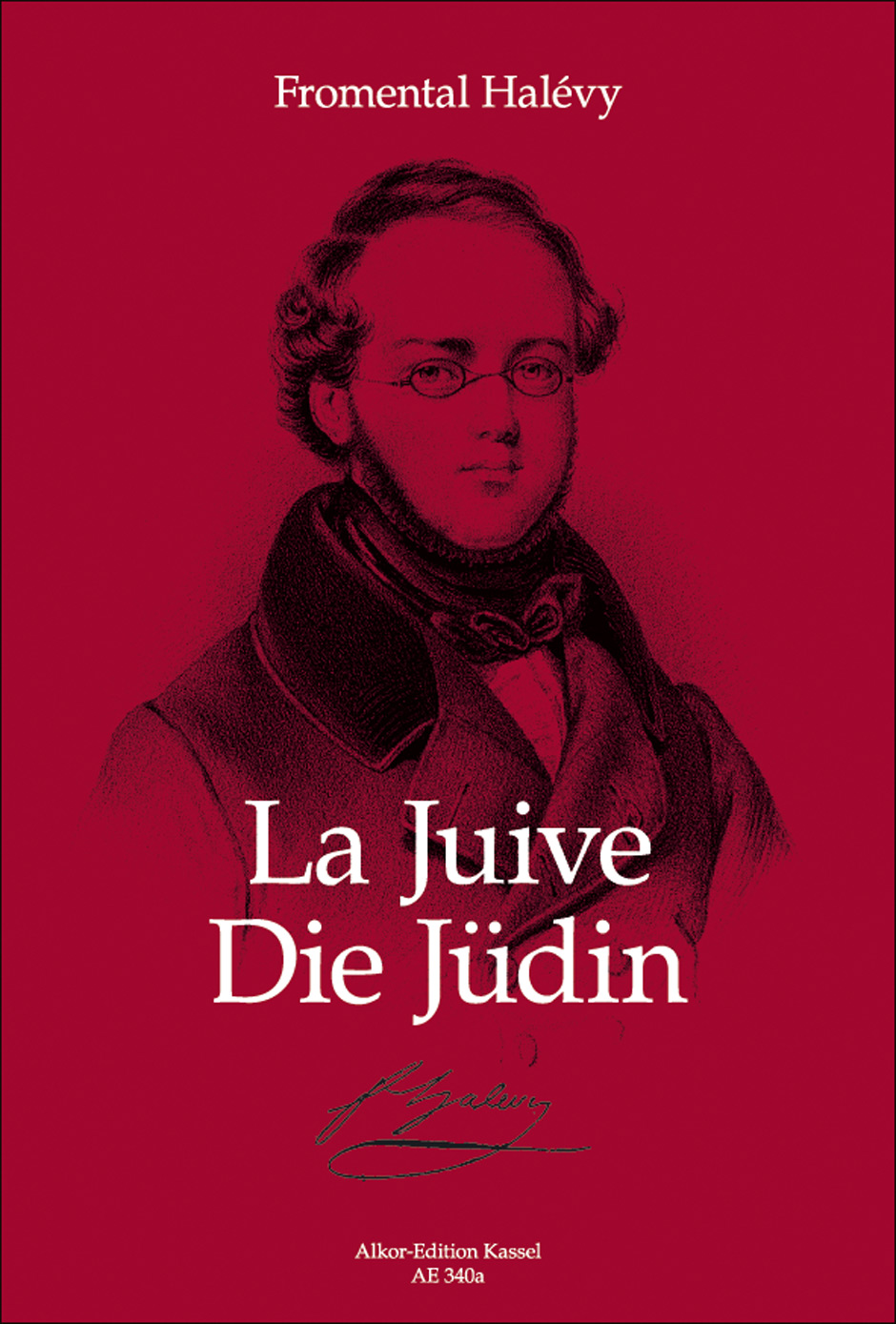
Halevy La Juive / Die Judin for Vocal Score
La Juive / The Jewess
Opéra en cinq actes
Against the backdrop of the July Revolution of 1830, two libretti were written for the Grand Opéra in Paris by Eugène Scribe, probably the most famous poet of the July Monarchy: “La Juive” and “Les Huguenots”. In this way, Fromental Halévy's opera “La Juive” (1835) and Giacomo Meyerbeer's opera “Les Huguenots” (1836) are closely linked to the political history of France, and the libretti of the two works contain almost identical passages due to their almost simultaneous creation.
Already during the several months of rehearsals, “La Juive” was subject to changes and, above all, cuts, possibly not always with the authors' consent. A detailed comparison of the sources leads to the conclusion that the opera existed in Paris and during the lifetime of its authors in a variety of changing guises. The distribution of roles was also initially different.
“La Juive” is part of a long tradition of operas dating back to the 17th century, in which the misdeeds of the powerful were presented as a lesson and deterrent. The premiere took place on 23 February 1835. The work developed into a steadily growing success with audiences, with over 500 performances in Paris alone by the end of the 19th century.
The vocal score is based on the full score revised and re-edited by Karl Leich-Galland in 2004 (AE00340). This new edition renders the work as it survived in contemporary vocal scores (M. Schlesinger, Brandus et Cie. and H. Lemoine) including “preventive” cuts made by the composer himself.
작곡가 Halevy