
Happy Present Meet
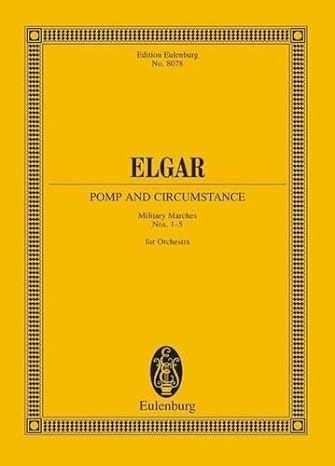
Elgar Pomp and Circumstance Marches 1-5 for Study score
엘가 위풍당당 행진곡 1-5번 스터디 스코어
orchestra
Content text:
March No. 1
March No. 2
March No. 3
March No. 4
March No. 5
Year of composition: 1901 - 1930
Pride, pomp, and circumstance of glorious war! – It is these words from Shakespeare's Othello that the probably best-known work by the English composer Sir Edward William Elgar falls back on: the five marches which are contained in Pomp and Circumstance Marches, op. 39.
The work was a sensational success from the very beginning, especially March No. 1 should be going around in the head of every lover of classical music. At its premiere in 1901 under the composer's direction, the audience requested two repeats; in 1902 the words of 'Land of Hope and Glory' were added to the march at the request of Edward VII for his coronation ceremonial. The resulting version is now performed every year at the Last Night of the Proms and as English hymn at the Commonwealth Games.
Motivated by the success of the first two marches, Elgar composed another three which were performed in 1905, 1907 and 1930. No. 4 is as euphemistic and formal as No. 1 whereas the others are of a rather melancholy nature.
긍지와 화려함, 영광스러운 전쟁의 정경! – 아마도 영국 작곡가 Sir Edward William Elgar의 가장 잘 알려진 작품은 셰익스피어의 오델로에 나오는 이 단어입니다: Pomp and Circumstance Marches, op.에 포함된 다섯 개의 행진곡. 39.
이 작품은 처음부터 놀라운 성공을 거두었고, 특히 3월 1일은 클래식 음악을 사랑하는 모든 이들의 머리 속에 맴돌고 있을 것입니다. 1901년 작곡가의 지시에 따라 초연되었을 때 청중은 두 번의 반복을 요청했습니다. 1902년 에드워드 7세의 대관식 요청으로 행진곡에 '희망과 영광의 땅'이라는 문구가 추가됐다. 결과 버전은 이제 매년 마지막 밤 프롬스(Last Night of the Proms)와 영연방 게임(Commonwealth Games)에서 영어 찬송가로 공연됩니다.
처음 두 행진곡의 성공에 힘입어 엘가는 1905년, 1907년, 1930년에 연주된 또 다른 세 곡을 작곡했습니다. 4번은 1번만큼 완곡하고 형식적인 곡인 반면, 나머지 곡들은 다소 우울한 성격을 띠고 있습니다.
작곡가 Elgar, Edward (1857-1934)
에디터 Bowen, Brian