Happy Present Meet
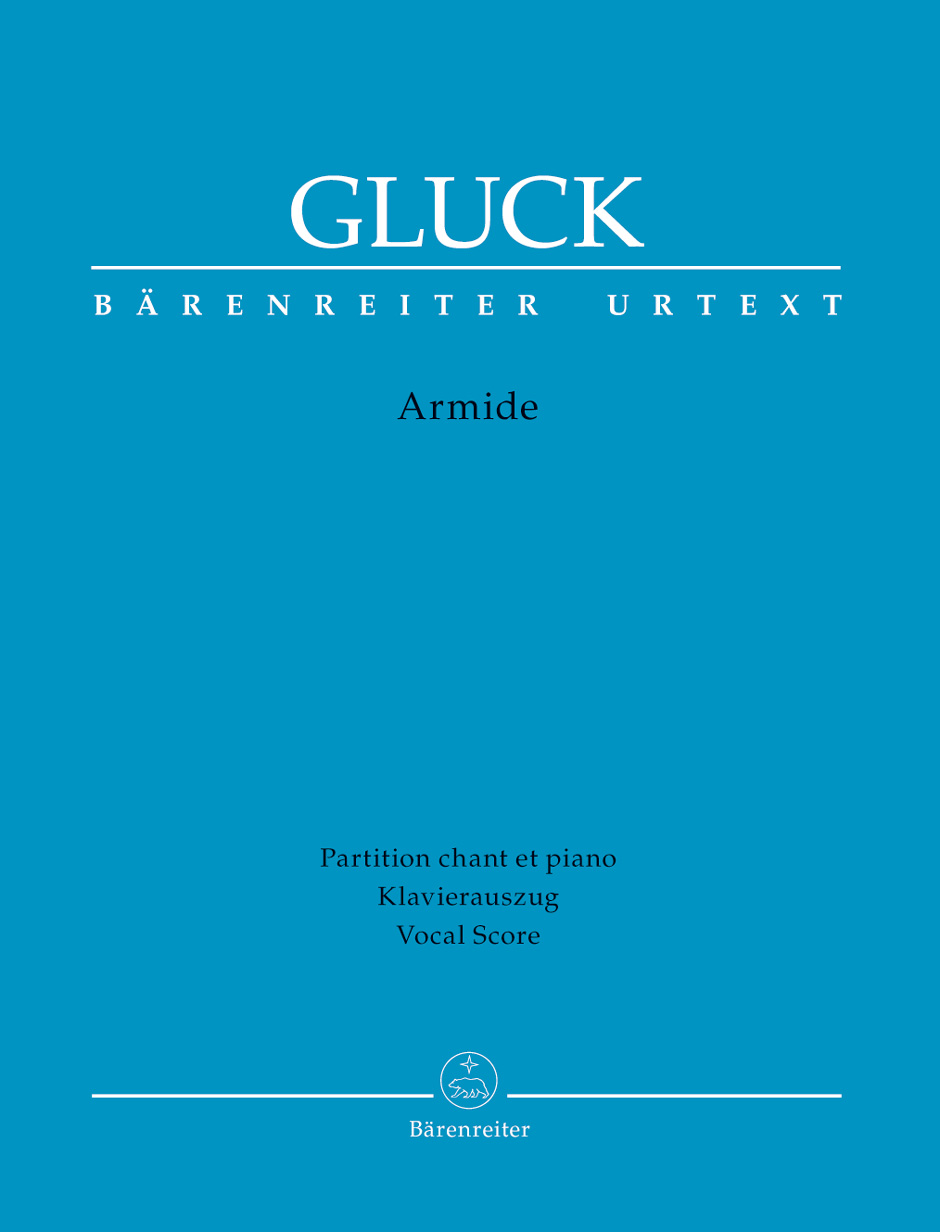
Gluck Armide for Vocal Score (F/G)
Drame héroïque in five acts
The episode about Armida from Torquato Tasso’s epic poem “La Gerusalemme liberata” (1575) has been one of the most popular opera subjects since the 17th century, inspiring numerous composers including Lully, Haydn, Rossini and Dvorák to set it to music. Gluck’s “Armide”, which was successfully premiered in Paris in 1777, is the third opera the composer wrote for the Académie Royale de Musique.
The beautiful sorceress Armide holds the crusader Renaud captive on her island. After the brave hero is initially unimpressed by Armide’s charms, the two eventually fall in love. Only when Renaud is reminded by the other knights of his crusading vows does he abandon the desperate Armide, whereupon she curses the faithless one, destroys her enchanted castle and vanishes on a winged chariot. Intimate monologues alternate with large choral and ballet scenes. The characterisation of the individuals is musically finely differentiated. In stark contrast to the pastoral moments are the sudden dramatic entries of the supernatural, for example the appearance of personified hatred and the spirits from hell.
토르콰토 타소의 서사시 "예루살렘 해방"(1575)에 나오는 아르미다 이야기는 17세기 이후 가장 인기 있는 오페라 소재 중 하나로, 륄리, 하이든, 로시니, 드보르작 등 수많은 작곡가들에게 영감을 주어 곡을 붙였습니다. 글루크의 오페라 "아르미드"는 1777년 파리에서 초연되었으며, 글루크가 왕립 음악 아카데미를 위해 작곡한 세 번째 오페라입니다.
아름다운 마법사 아르미드는 십자군 기사 르노를 자신의 섬에 가두어 포로로 잡습니다. 용감한 영웅 르노는 처음에는 아르미드의 매력에 끌리지 않지만, 결국 두 사람은 사랑에 빠집니다. 그러나 다른 기사들이 르노에게 십자군 서약을 상기시키자, 르노는 절망에 빠진 아르미드를 버리고 떠나고, 이에 아르미드는 배신한 르노를 저주하고 마법에 걸린 성을 파괴한 후 날개 달린 전차를 타고 사라집니다. 오페라는 내밀한 독백 장면과 대규모 합창 및 발레 장면이 번갈아 나타납니다. 등장인물들의 성격 묘사는 음악적으로 매우 섬세하게 구분된다. 전원적인 분위기와는 극명한 대조를 이루며, 증오의 화신이나 지옥의 악령과 같은 초자연적인 요소들이 갑작스럽고 극적으로 등장한다.
작곡가 Gluck, Christophe Willibald (1714-1787)
에디터 Hortschansky, Klaus