Happy Present Meet
Tchaikovsky Nutcracker Suite for Woodwind Quintet and Piano
Fl. +Picc.(opt.) Ob.+CA(opt.) Cl.(in Bb&A)+Tambourine Hn. Bsn. Pft.+Celeste(opt.)
Difficulty : D - approx. ABRSM Grade 6-7
Duration : 21’30
Tchaikovsky’s Nutcracker Suite arranged for wind quintet and piano: sparkling, fun and substantial work with individual numbers great as encores.
관악 5중주와 피아노를 위해 편곡된 차이코프스키의 호두까기 인형 모음곡은 앙코르로 훌륭한 개별 곡과 함께 반짝이고 재미있으며 실질적인 작품입니다.
Following on from the success of The Sleeping Beauty, Tchaikovsky was commissioned to write a third ballet to be based on E.T.A. Hoffmann’s story, The Nutcracker and the Mouse King. He worked on the The Nutcracker throughout 1891 despite commitments to conducting tours in Europe and America, personal grief at his sister’s death and his continuing dislike of both the storyline and the musical restrictions imposed upon him by the ballet’s choreographer.
Tchaikovsky wanted to be the first to showcase the celeste – a newly-invented instrument which he used in the ballet to portray the Sugar Plum Fairy. Worried that others might beat him to it he decided to create the Nutcracker Suite, an orchestral concert suite comprising a selection of eight of the ballet’s numbers. The suite was premièred in 1892, ten months before the ballet’s first performance. Tchaikovsky was never especially proud of The Nutcracker, feeling it was “infinitely poorer than The Sleeping Beauty”, however, although it was to be many decades until the complete ballet achieved worldwide popularity the suite was an instant ‘hit’.
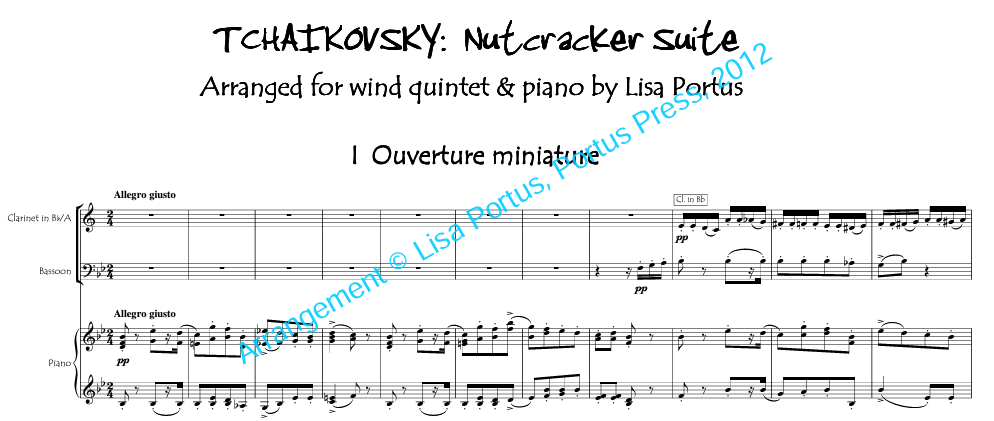
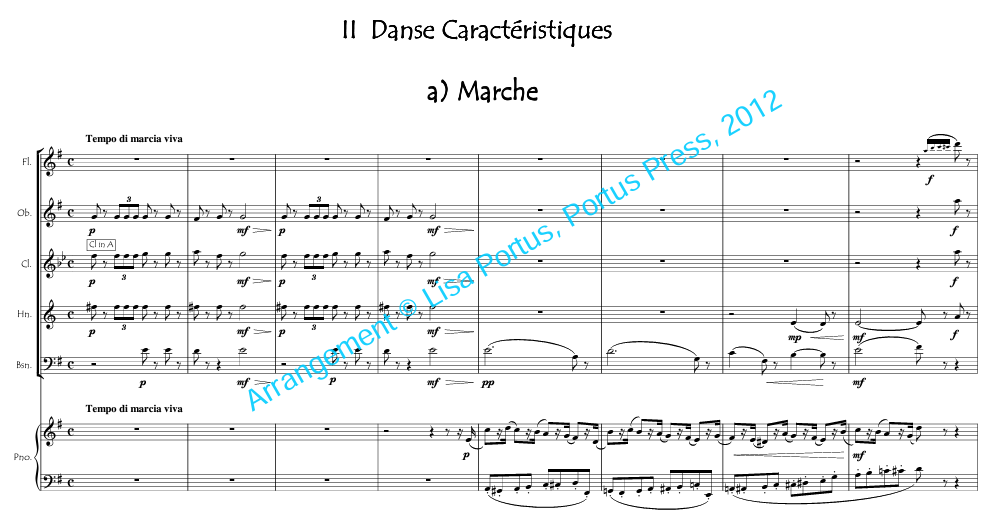
The suite’s movements are most commonly given their French titles, which translate as: I – Miniature Overture, II – Characteristic Dances (March, Dance of the Sugar Plum Fairy, Russian Dance, Arabian Dance, Chinese Dance, Dance of the Reed-Flutes;), and III. Waltz of the Flowers.
A sparkling, fun and substantial work with individual numbers ideally suited to ‘dip into’ – perhaps for encores?
잠자는 숲속의 미녀의 성공에 이어 차이콥스키는 E.T.A.를 기반으로 한 세 번째 발레를 작곡하도록 의뢰 받았습니다. 호프만의 이야기, 호두까기 인형과 생쥐왕. 그는 유럽과 미국 순회 공연을 하겠다는 약속, 여동생의 죽음에 대한 개인적인 슬픔, 발레 안무가가 그에게 부과한 줄거리와 음악적 제한에 대한 지속적인 혐오에도 불구하고 1891년 내내 호두까기 인형을 작업했습니다.
차이콥스키는 발레에서 설탕 자두 요정을 묘사하기 위해 사용했던 새로 발명된 악기인 셀레스트를 가장 먼저 선보이고 싶었습니다. 다른 사람들이 자신을 이길까봐 걱정된 그는 8개의 발레 곡으로 구성된 오케스트라 콘서트 모음곡인 호두까기 인형 모음곡을 만들기로 결정했습니다. 이 모음곡은 발레 초연이 열리기 10개월 전인 1892년에 초연되었습니다. 차이코프스키는 호두까기 인형을 특별히 자랑스러워한 적이 없으며 "잠자는 숲속의 미녀보다 훨씬 더 가난하다"고 느꼈습니다. 그러나 발레 전곡이 세계적인 인기를 얻기까지는 수십 년이 걸렸지만 이 모음곡은 즉각적인 '히트'였습니다.
모음곡의 악장은 가장 일반적으로 다음과 같이 프랑스어 제목으로 지정됩니다. I – 소형 서곡, II – 특징적인 춤(3월, 설탕 자두 요정의 춤, 러시아 춤, 아라비아 춤, 중국 춤, 갈대 피리의 춤; ), III. 꽃의 왈츠.
개별 숫자가 포함된 반짝이고 재미있으며 실질적인 작품은 '들어가기'에 이상적으로 적합합니다. 아마도 앙코르에 적합할까요?
편곡자 Portus, Lisa
작곡가 Tchaikovsky, Pyotr Ilyich (1840-1893)