
Happy Present Meet
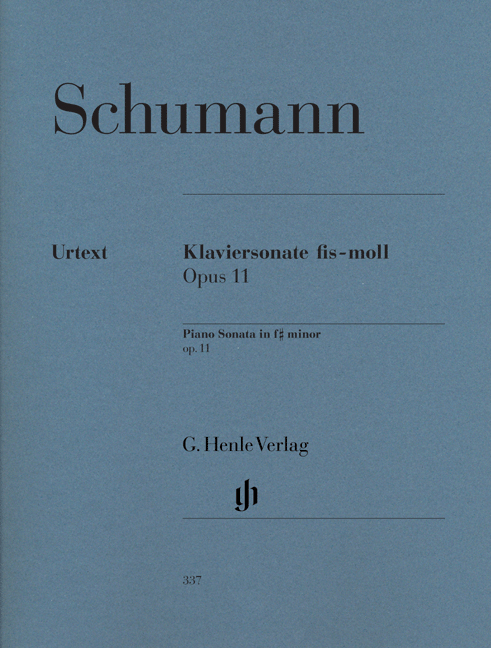
Schumann Piano Sonata No.1 in f# minor Op.11 for Piano Solo
슈만 피아노 소나타 1번 f#단조 Op.11 피아노 독주(솔로)
악기 구성
Piano Solo 피아노 독주(솔로)
Ernst Herttrich (Editor) 에른스트 헤르트리히
Hans-Martin Theopold (Fingering Piano) 한스마르틴 테오폴트
Urtext Edition, paperbound
Pages 74 (X+64)
Content
Piano Sonata f# minor Op.11 피아노 소나타 f#단조
9 difficult
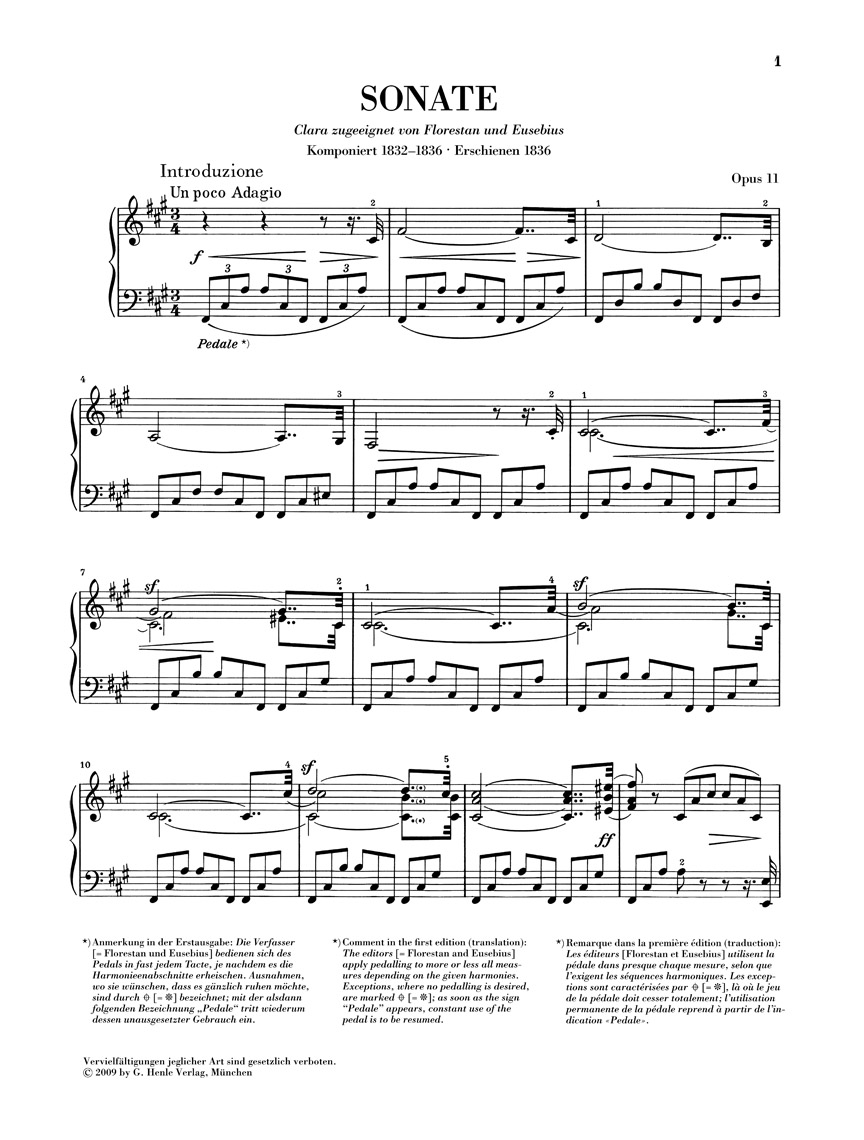
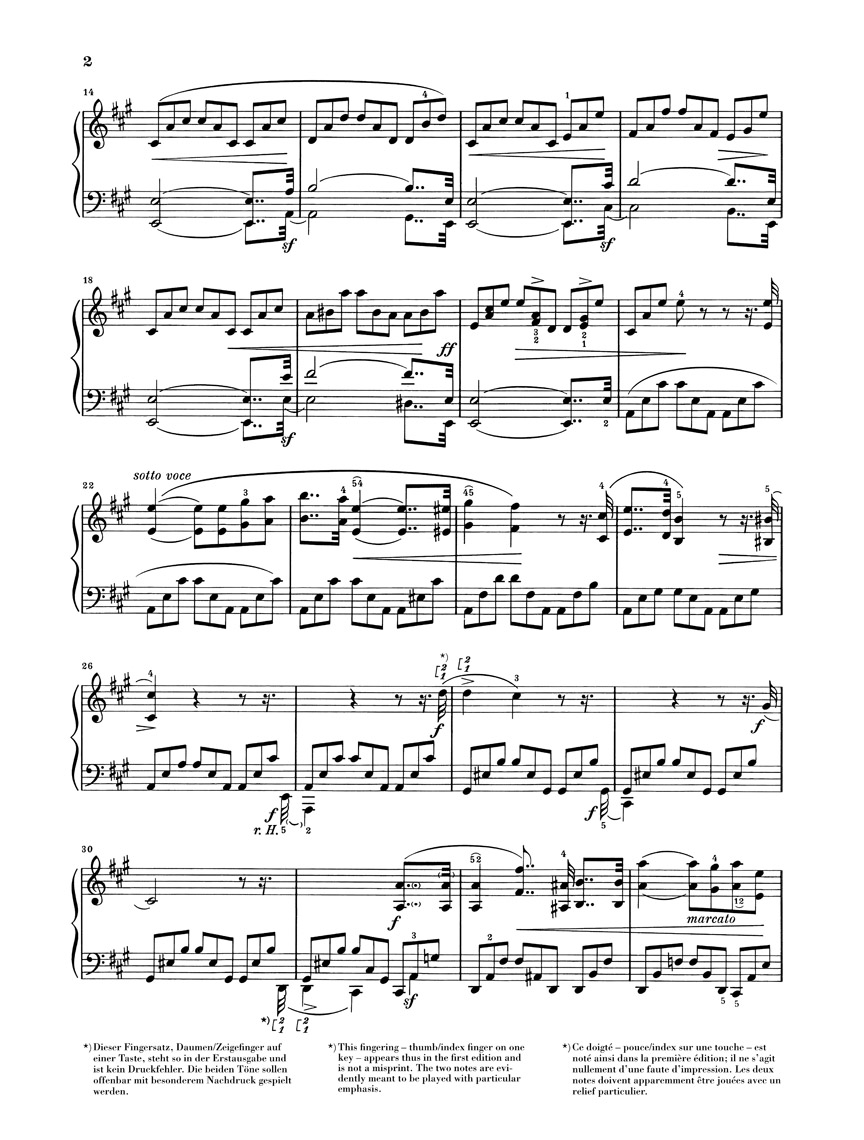
Following Schumann’s fi rst, evidently unsuccessful attempt at composing a "Sonata" - he only had the opening movement published under the title "Allegro in b minor" - he tried once again in 1833. It is a well-known fact that this sonata was composed while he was in close contact with Clara Wieck, who was thirteen at the time. Individual motifs from it can be found later in Clara’s work; but by the same token, individual figures can be found in the sonata which point to Clara’s “Pièces caractéristiques” op. 5. In addition Schumann used an almost literal adaptation of his song “To Anna” for the second movement. We have included this in the appendix of our edition and in so doing show the roots of this composition.
슈만이 처음 시도한 “소나타”는 분명 성공하지 못했고(그는 첫 악장만 「알레그로 b단조」라는 제목으로 출판했습니다), 1833년에 그는 다시 한번 도전했습니다. 이 소나타가 당시 열세 살이던 클라라 비크와 가깝게 지내던 시기에 작곡되었다는 사실은 잘 알려져 있습니다. 이 곡의 개별 동기들은 훗날 클라라의 작품에서 발견되며, 마찬가지로 이 소나타에서도 클라라의 「성격적 소품」 Op.5를 가리키는 개별 음형들을 찾을 수 있습니다. 또한 슈만은 둘째 악장에 자신의 가곡 「안나에게」를 거의 그대로 편곡해 사용했습니다. 헨레 판은 이 가곡을 부록에 실어 이 작품의 뿌리를 보여 줍니다.
작곡가 Schumann, Robert (1810-1856)
에디터 Herttrich, Ernst
Schumann-Liszt Liebeslied (Widmung) aus "Myrthen" Op.25 for Piano Solo
Schumann Fantasy Pieces Op.12 (with appendix WoO 28) for Piano Solo
Schumann Kreisleriana Op.16 for Piano Solo
Rachmaninoff Complete Etudes-Tableaux for Piano Solo
Brahms Sonatas, Scherzo and Ballades for Piano Solo
Schumann Album for the Young Op.68 for Piano Solo
Schumann Piano Sonata No.2 in g minor Op.22 for Piano Solo
Schumann Toccata in C major Op.7 (Versions 1830 and 1834) for Piano Solo
Rachmaninoff Etudes Tableaux Op.33 and Op.39 for Piano Solo
Rachmaninoff Piano Sonata No.1 in d minor Op.28 for Piano Solo