Happy Present Meet
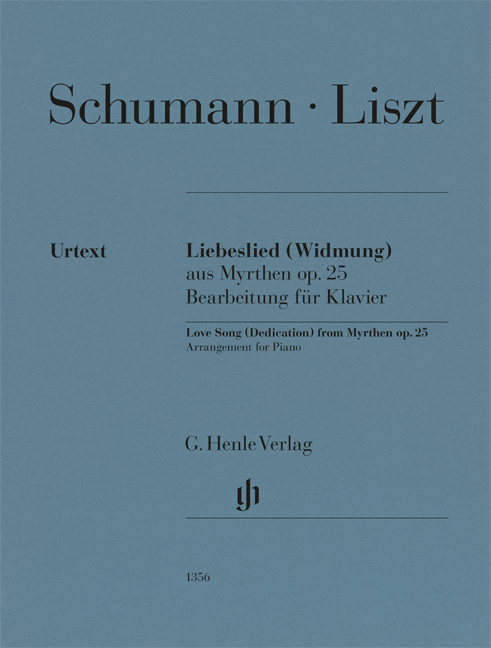
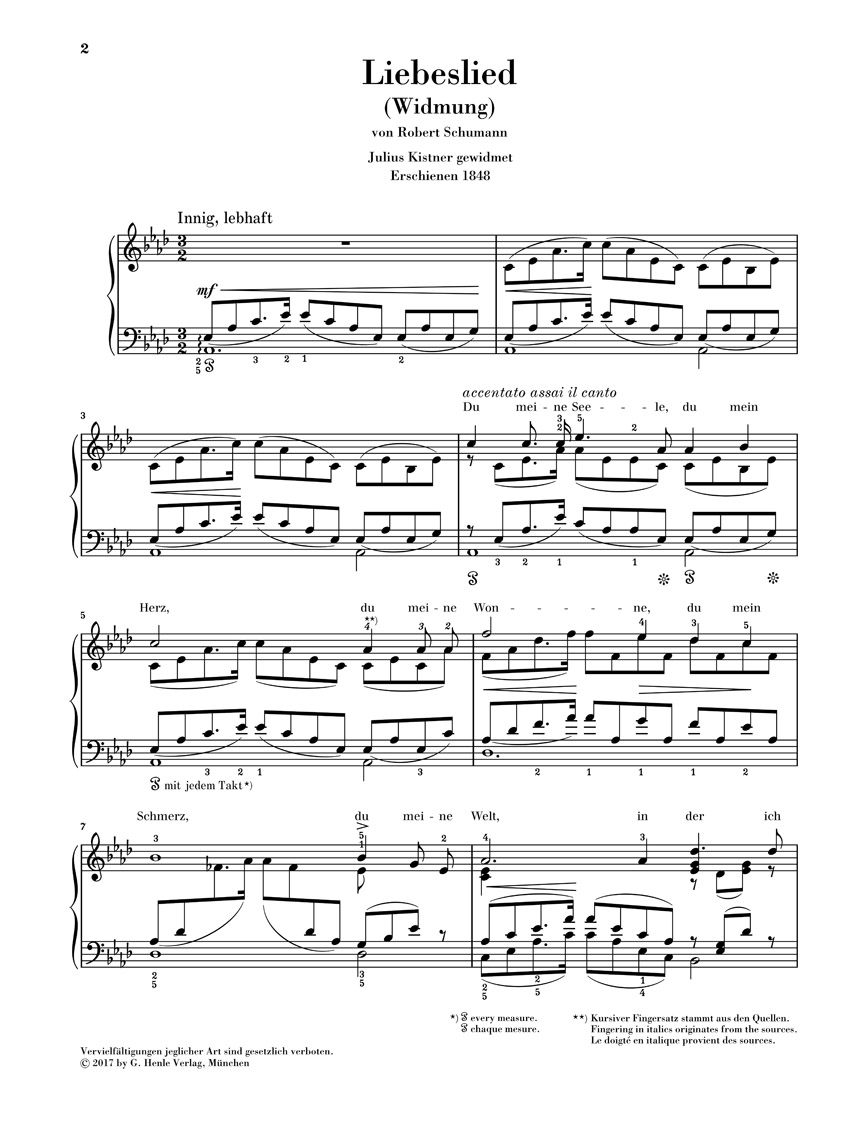
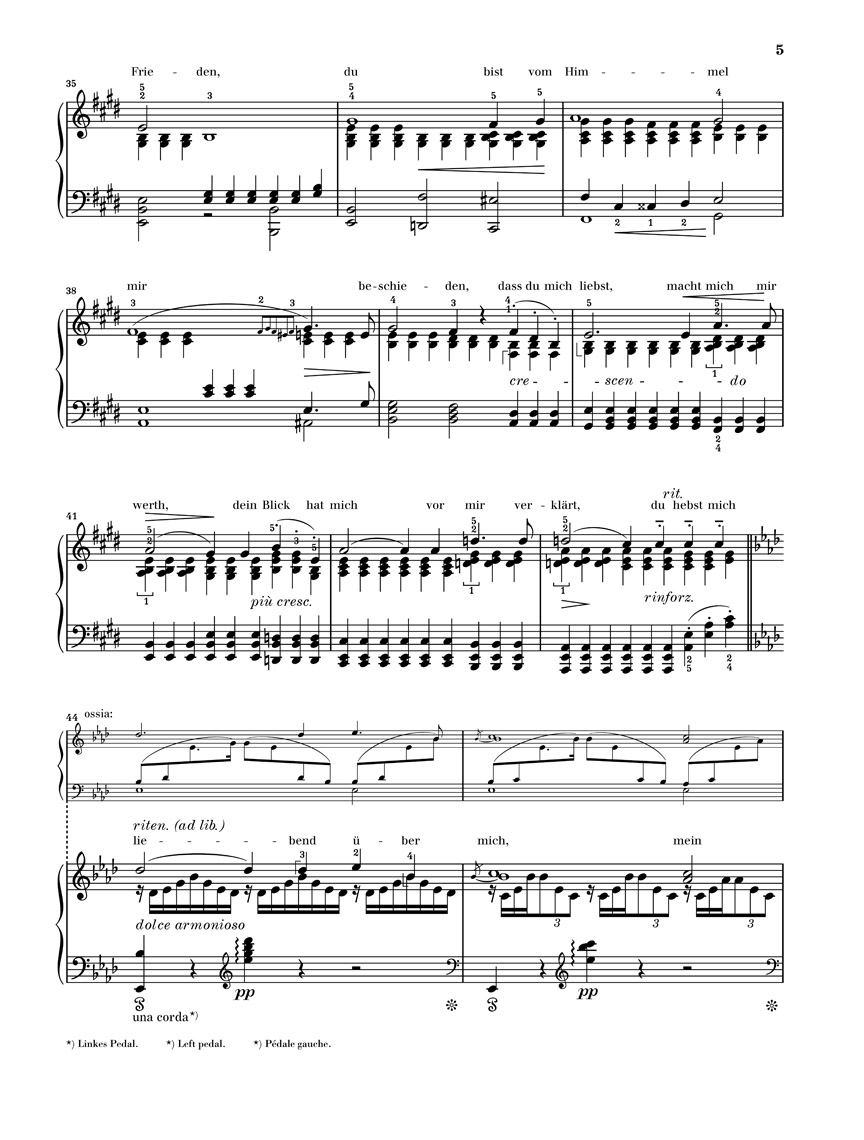
Schumann-Liszt Liebeslied (Widmung) aus "Myrthen" Op.25 for Piano Solo
슈만/리스트 「미르테의 꽃」 Op.25 중 사랑의 노래 (헌정) 피아노 편곡 피아노 독주(솔로)
악기 구성
Piano Solo 피아노 독주(솔로)
Annette Oppermann (Editor) 아네테 오퍼만
Markus Bellheim (Fingering Piano) 마르쿠스 벨하임
Mária Eckhardt (Preface) 마리아 에크하르트
Arrangement for Piano, Urtext Edition, paperbound
Pages 18 (V+13)
Content
Love Song (Robert Schumann) / Op.25 사랑의 노래 (로베르트 슈만) (Dedication, 헌정)
7 difficult
In his virtuosic piano arrangement of Schumann’s “Widmung” (“Du meine Seele, du mein Herz”), Franz Liszt transformed this intimate song into a dramatic declaration that reaches its powerful climax at the phrase “Mein guter Geist, mein bess’res Ich”, using chords to be played con somma passione. In Liszt’s autograph the melody is overlaid by the song text, but he changes the title to “Liebeslied”. The first edition, published in Leipzig in 1848, retained this heading, and thus the song is still known today under two different titles. In collaboration with Liszt scholar Mária Eckhardt Henle Verlag presents this best-known of all of Liszt’s Schumann arrangements in a reliable Henle Urtext quality edition.
프란츠 리스트는 슈만의 「헌정(Widmung)」(“그대 나의 영혼, 그대 나의 마음”)을 비르투오소 피아노곡으로 편곡하면서, 이 내밀한 가곡을 극적인 고백으로 바꾸어 놓았습니다. 이 고백은 “나의 선한 영, 더 나은 나의 자아” 구절에서 콘 솜마 파시오네(con somma passione)로 연주하는 화음과 함께 힘찬 절정에 이릅니다. 리스트의 자필 악보에는 선율 위에 가사가 적혀 있지만, 그는 제목을 「사랑의 노래(Liebeslied)」로 바꾸었습니다. 1848년 라이프치히에서 출판된 초판도 이 제목을 유지했으며, 그 때문에 이 곡은 오늘날까지 두 가지 제목으로 알려져 있습니다. 헨레는 리스트 연구자 마리아 에크하르트와 함께 리스트의 슈만 편곡 가운데 가장 유명한 이 곡을 믿을 수 있는 헨레 원전판 품질로 선보입니다.
편곡자 Liszt, Franz (1811-1886)
작곡가 Liszt, Franz (1811-1886)
Schumann, Robert (1810-1856)
에디터 Oppermann, Annette