
Happy Present Meet

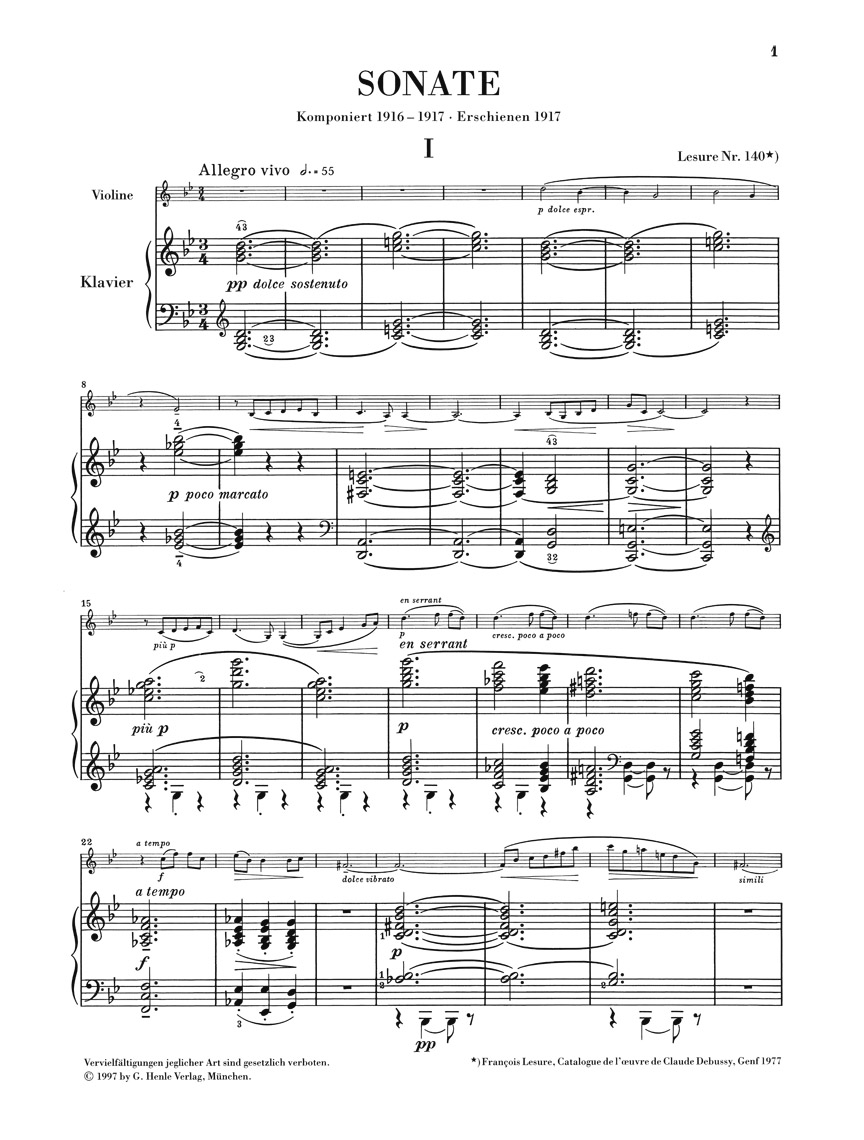
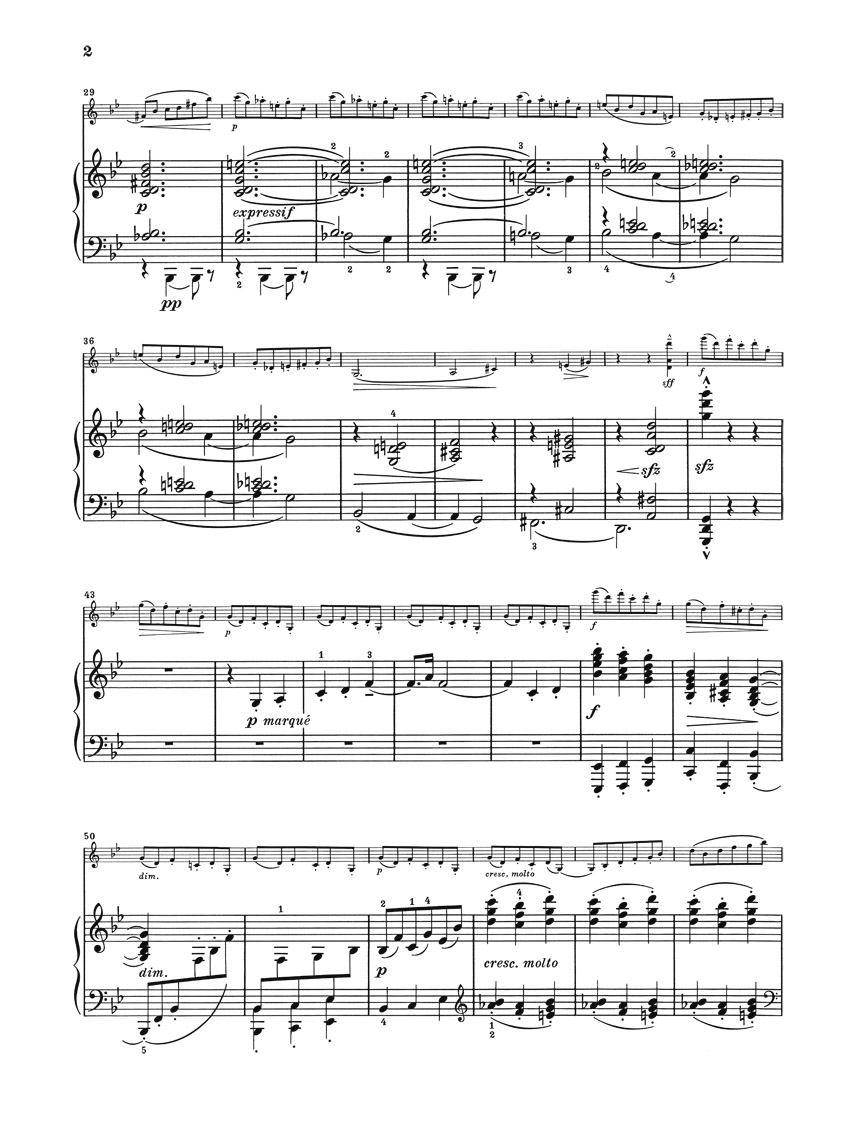
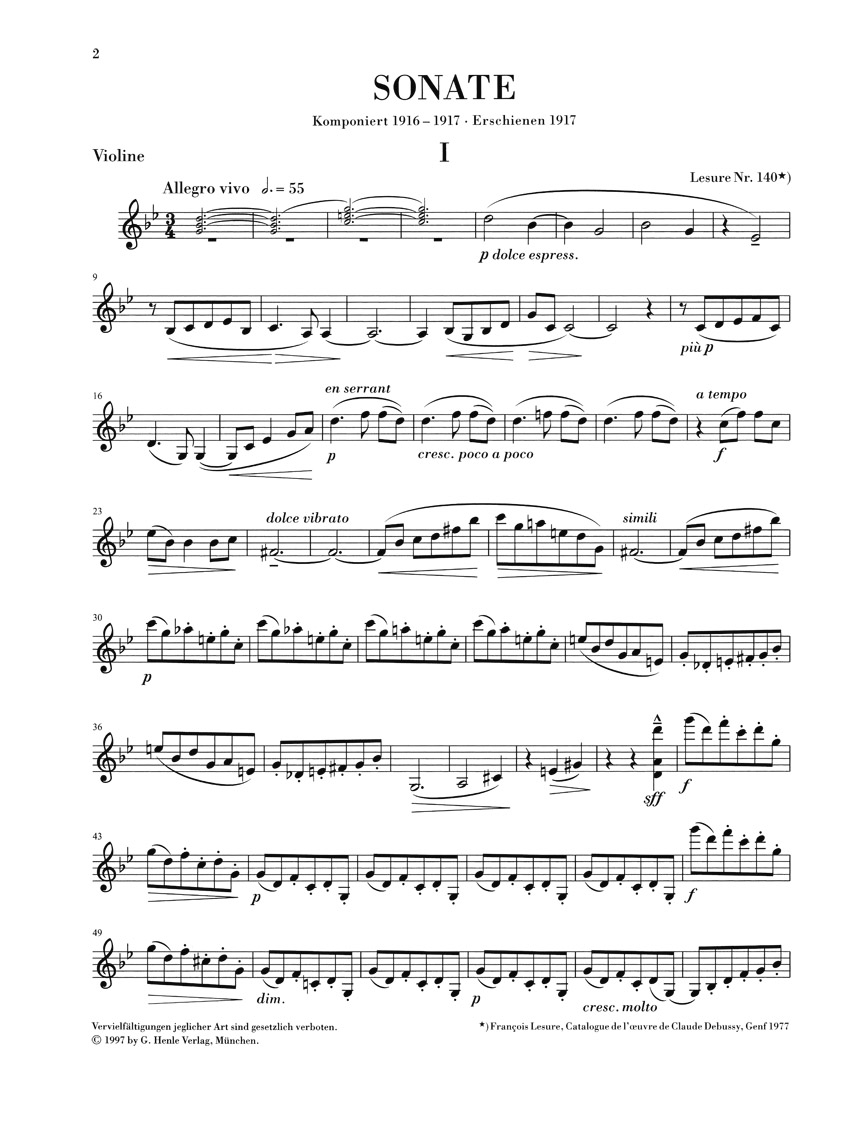
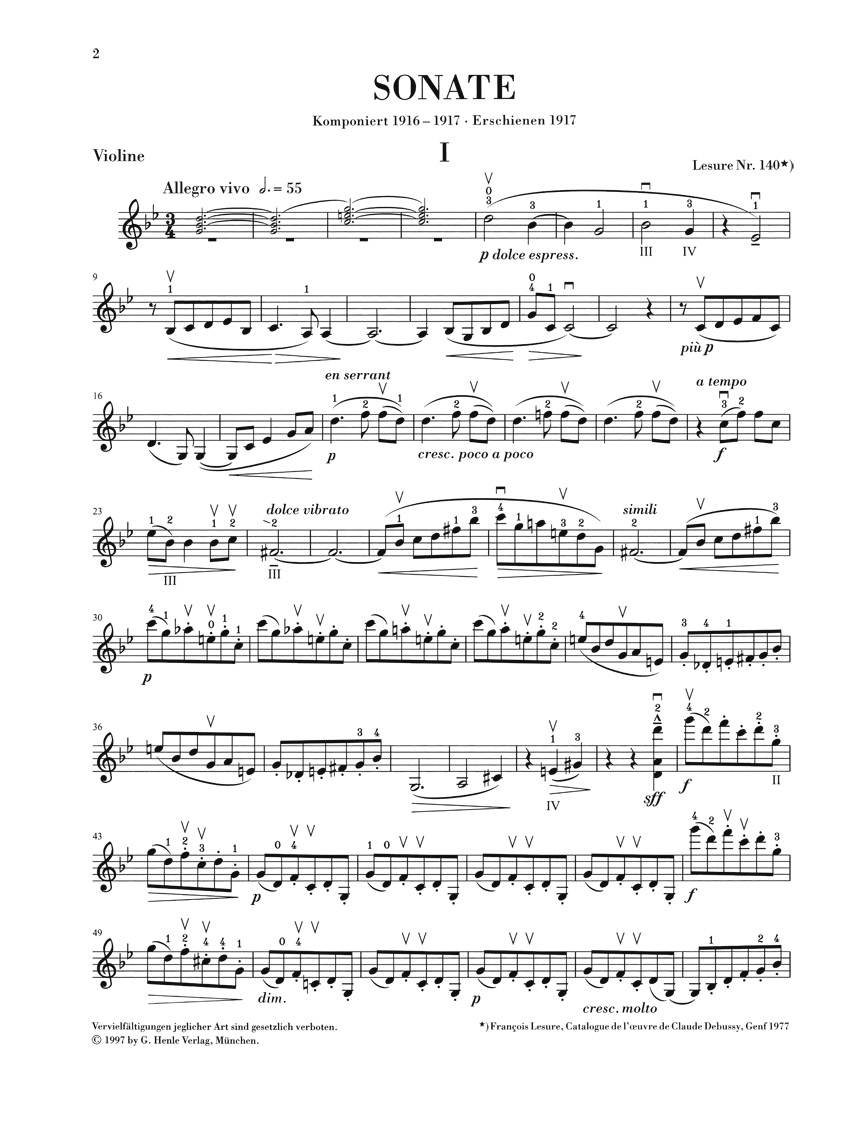
Debussy Violin Sonata for Violin and Piano
드뷔시 바이올린 소나타 g단조 바이올린과 피아노
악기 구성
Violin and Piano 바이올린과 피아노
Ernst-Gunter Heinemann (Editor) 에른스트귄터 하이네만
Klaus Schilde (Fingering Piano) 클라우스 쉴데
Kurt Guntner (Fingering and bowing for Violin) 쿠르트 군트너
François Lesure (Preface) 프랑수아 르쥐르
Urtext Edition, paperbound
with marked and unmarked string parts
Pages 58 (VI+30+11+11)
Content
Violin Sonata 바이올린 소나타
6 medium
Debussy had intended to write a cycle comprising six sonatas. However, as he was seriously ill, he was forced to conclude it with the third one. Whereas the Sonata for Cello and Piano and the one for Flute, Viola and Harp were quickly written in 1915, an unusually fruitful compositional year, the violin sonata posed difficulties for the composer in the following year. He struggled with the finale in particular, and was only able to send the work to the publisher Durand in April 1917. Its difficult genesis is soon forgotten when one listens to the resulting work: it displays perfect classicism and is full of life, as the composer himself remarked.
드뷔시는 여섯 곡의 소나타로 이루어진 연작을 쓰려 했습니다. 그러나 중병을 앓고 있던 그는 세 번째 소나타로 연작을 마무리할 수밖에 없었습니다. 첼로와 피아노를 위한 소나타, 그리고 플루트·비올라·하프를 위한 소나타는 유난히 창작의 결실이 많았던 1915년에 빠르게 완성되었지만, 바이올린 소나타는 이듬해 작곡가에게 어려움을 안겼습니다. 그는 특히 피날레와 씨름했고, 1917년 4월에야 출판사 뒤랑에 작품을 보낼 수 있었습니다. 완성된 작품을 들으면 그 어려웠던 탄생 과정은 곧 잊힙니다. 작곡가 자신이 말했듯이, 이 곡은 완벽한 고전주의를 보여 주며 생기로 가득합니다.
작곡가 Debussy, Achille Claude (1862-1918)
에디터 Heinemann, Ernst-Gunter
Strauss Violin Sonata in Eb major Op.18 for Violin and Piano
Brahms Complete 3 Violin Sonatas and Allegro (Scherzo) for Violin and Piano
Beethoven Violin Sonata No.9 in A major Op.47 (Kreutzer) for Violin and Piano
Grieg Violin Sonata No.3 in c minor Op.45 for Violin and Piano
Saint-Saens Sonata No.1 in d minor Op.75 for Violin and Piano
Ravel Sonata in G major for Violin and Piano
Vitali Chaconne in g minor for Violin and Piano (Francescatti)
Strauss Violin Sonata in Eb major Op.18 for Violin and Piano