
Happy Present Meet
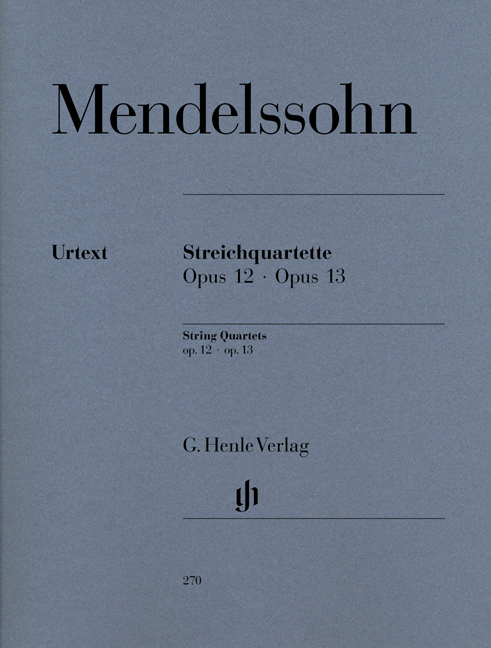
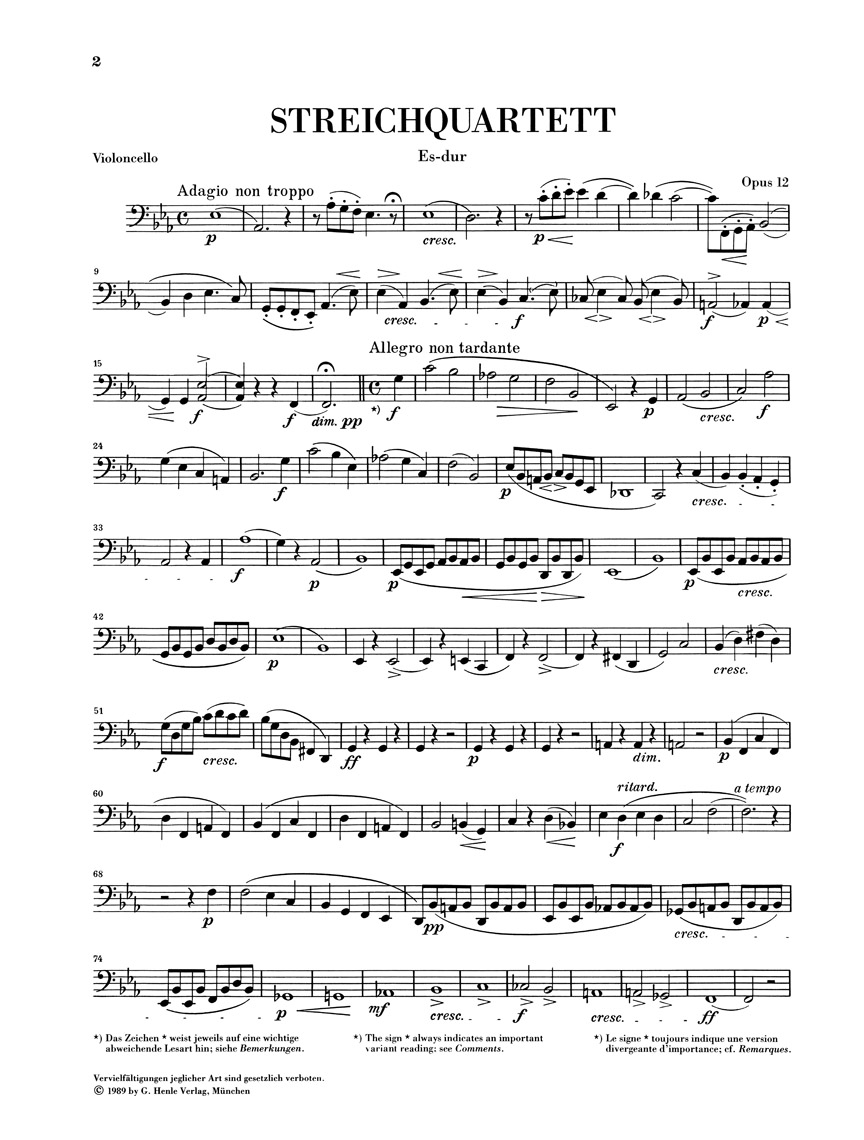
Mendelssohn String Quartets Op.12 and 13 (Parts)
멘델스존 현악 사중주(스트링 콰르텟) Op.12, 13 파트보
악기 구성
String Quartets 현악 4중주(콰르텟)
2 Violins, Viola and Cello 바이올린 2대, 비올라, 첼로
Ernst Herttrich (Editor) 에른스트 헤르트리히
Parts, Urtext Edition, paperbound
Pages 117 (VI+35+26+27+23)
Content
String Quartet a minor Op.13 현악 사중주 a단조
Appendix: Song “Frage” Op.9 No.1 부록: 가곡 「질문」
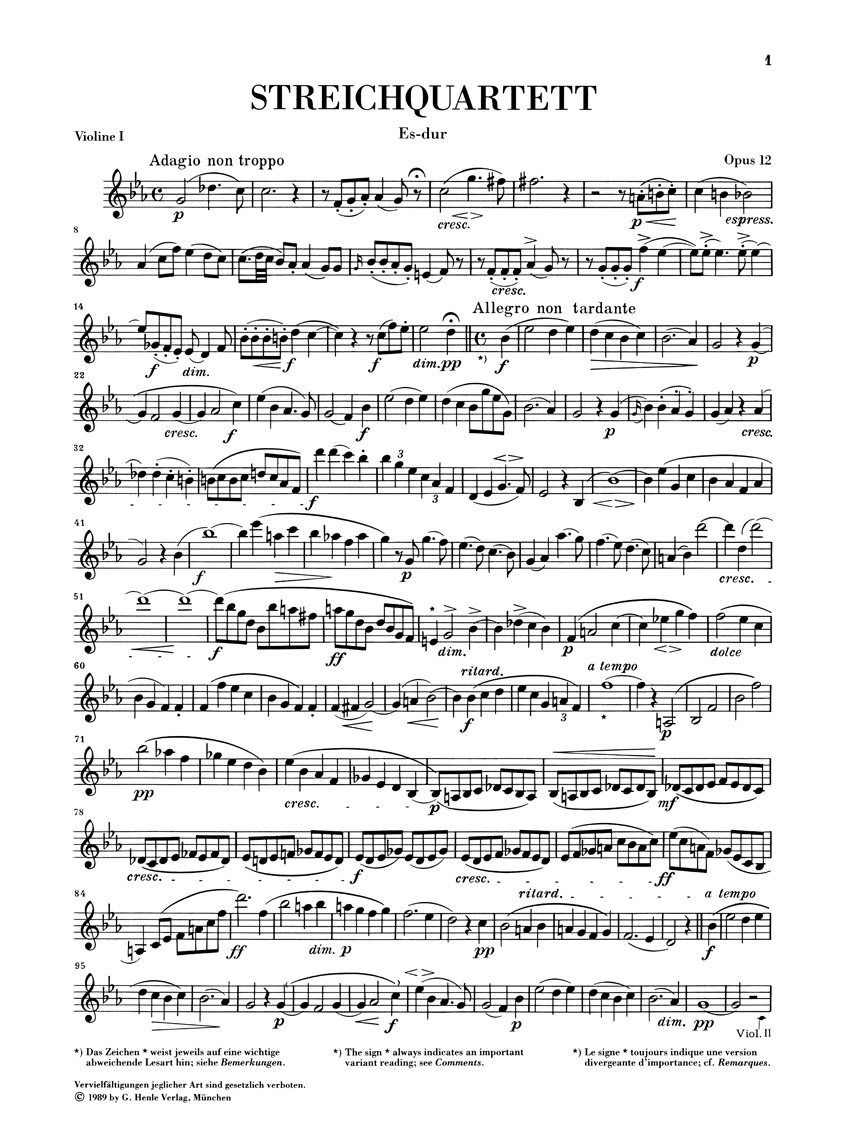
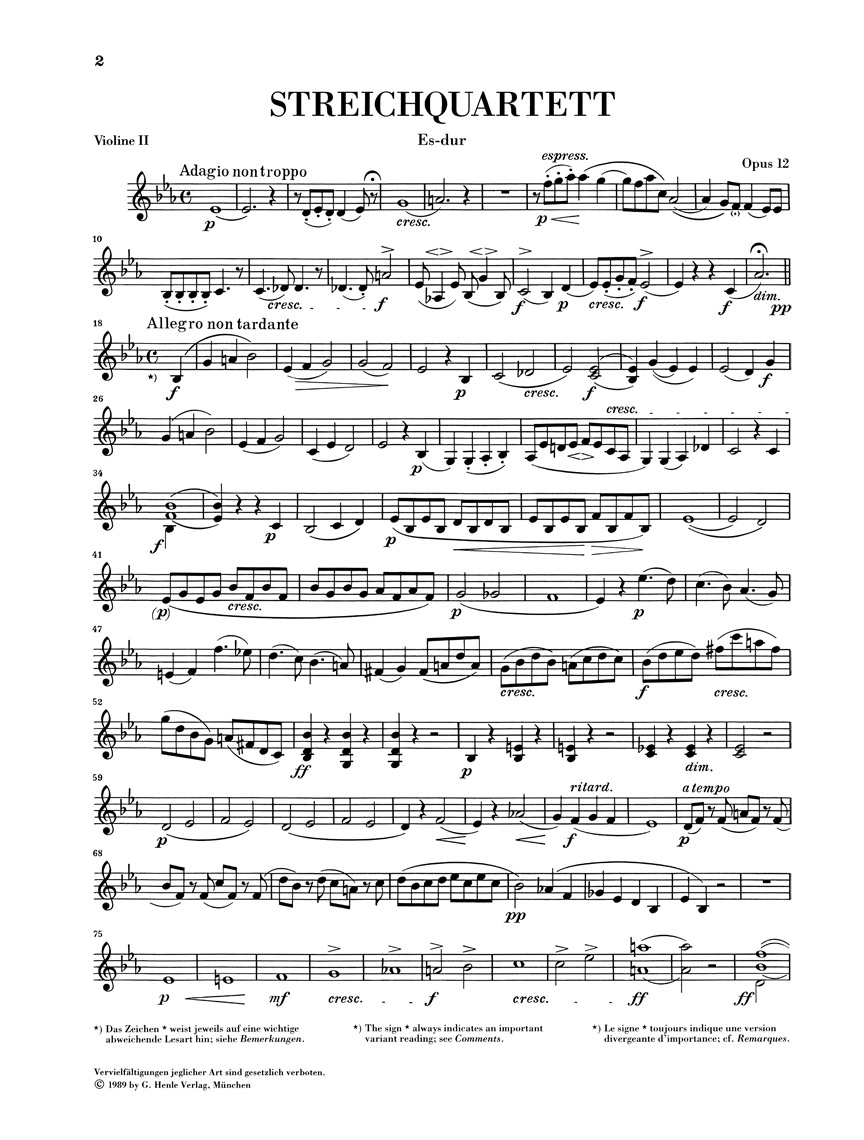
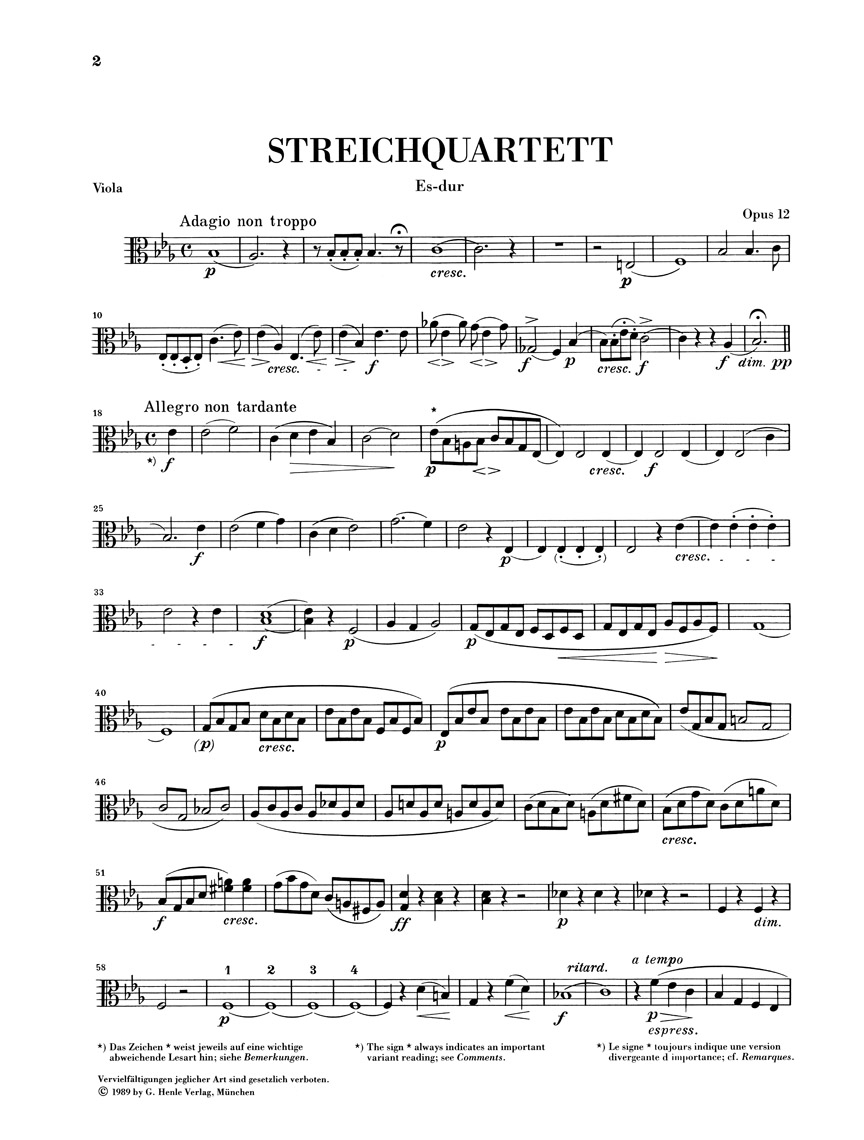
String Quartet Eb major Op.12 현악 사중주 Eb장조
The string quartet is generally considered as the chamber-music genre of the classical era: invented by Haydn, elaborated by Haydn and Mozart, and brought to its compositional peak by Beethoven. All later quartet composers had to measure themselves against the works of these three masters. This applies first and foremost to Mendelssohn, who has always been called a “classical romantic.” His Quartet in a minor op. 13 in particular is said to have strong Beethovenian stylistic traits. It was composed in late summer and fall 1827, shortly after Beethoven’s late quartets appeared in print, works that Mendelssohn was no doubt familiar with. The Quartet in E flat major op. 12 was written two years later, during Mendelssohn’s first tour of England. A textually identical score of the two quartets is published in Henle’s Study Scores series (HN 9270).
현악 사중주는 일반적으로 고전 시대를 대표하는 실내악 장르로 여겨집니다. 하이든이 창안하고, 하이든과 모차르트가 발전시켰으며, 베토벤이 작곡의 정점에 올려놓았습니다. 이후의 모든 사중주 작곡가는 이 세 거장의 작품과 자신을 견주어야 했습니다. 이는 무엇보다 늘 「고전적 낭만주의자」로 불려 온 멘델스존에게 해당합니다. 특히 a단조 사중주 Op.13에는 베토벤 양식의 특징이 강하게 나타난다고 합니다. 이 곡은 1827년 늦여름과 가을, 베토벤의 후기 사중주가 출판된 직후에 작곡되었으며, 멘델스존은 분명 이 작품들을 잘 알고 있었습니다. Eb장조 사중주 Op.12는 2년 뒤 멘델스존의 첫 영국 여행 중에 작곡되었습니다. 두 사중주의 텍스트가 동일한 총보가 헨레 스터디 스코어 시리즈(HN 9270)로 출판되어 있습니다.
작곡가 Mendelssohn, Felix (1809-1847)
에디터 Herttrich, Ernst
Tchaikovsky Violin Concerto in D major Op.35 for Violin and Piano (Oistrakh)
Mendelssohn Octet in Eb major Op.20 (Parts)
Mendelssohn String Quartet in f minor Op.80 (Parts)
Mendelssohn Octet in Eb major Op.20 (Parts)
Mendelssohn String Quartet in f minor Op.80 (Parts)