
Happy Present Meet
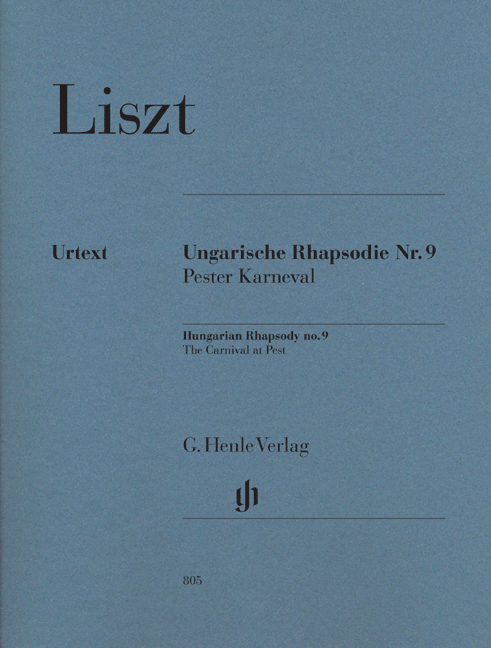
Liszt Hungarian Rhapsody No.9 (The Carnival at Pest) for Piano Solo
리스트 헝가리 광시곡 9번 「페스트의 카니발」 피아노 독주(솔로)
악기 구성
Piano Solo 피아노 독주(솔로)
Ernst Herttrich (Editor) 에른스트 헤르트리히
Andreas Groethuysen (Fingering Piano) 안드레아스 그로에투이젠
Mária Eckhardt (Preface) 마리아 에크하르트
Urtext Edition, paperbound
Pages 37 (VIII+29)
Content
Hungarian Rhapsody No.9 The Carnival at Pest 헝가리 광시곡 9번 〈페슈트의 카니발〉
8 difficult
Liszt’s ninth Rhapsody is the “Carnival at Pest” – one of the few Hungarian Rhapsodies to which he gave a name. Once again Liszt turns to Hungarian folk melodies and fuses them with improvisatory elements. The result is a dazzling virtuosic firework display. The relaxed atmosphere of a Budapest carnival around 1840 is brought to life – indeed Liszt is said to have recorded several themes when there. Accordingly, the work quickly found its way into European concert halls, and then into those around the world. To use Béla Bartok’s words, Liszt once again succeeds in creating a “work of perfect authenticity”.
리스트의 9번 광시곡은 「페스트의 사육제」로, 그가 제목을 붙인 몇 안 되는 헝가리 광시곡 중 하나입니다. 리스트는 다시 한번 헝가리 민속 선율로 눈을 돌려 즉흥적 요소와 융합합니다. 그 결과는 눈부신 비르투오소의 불꽃놀이입니다. 1840년경 부다페스트 사육제의 흥겨운 분위기가 생생하게 되살아나는데, 실제로 리스트가 그곳에서 몇몇 주제를 받아 적었다고 전해집니다. 그에 걸맞게 이 작품은 빠르게 유럽의 연주회장으로, 이어 전 세계 연주회장으로 퍼져 나갔습니다. 벨라 바르토크의 말을 빌리면, 리스트는 이번에도 “완벽한 진정성을 지닌 작품”을 만들어 내는 데 성공했습니다.
작곡가 Liszt, Franz (1811-1886)
에디터 Herttrich, Ernst
Chopin Polonaises for Piano Solo
Liszt 2 Ballads for Piano Solo
[절판]Liszt Hungarian Rhapsody No.2 for Piano Solo
Beethoven Complete Piano Sonatas Vol.2 No.16-32 for Piano Solo
Brahms Piano Sonata No.3 in f minor Op.5 for Piano Solo
Schumann Papillons Op.2 for Piano Solo
[절판] Liszt Spanish Rhapsody (Folies d`Espagne et Jota Aragonesa) for Piano Solo
Henle Urtext Notes - Jotter for Music and Notes (Pocket size)