Happy Present Meet
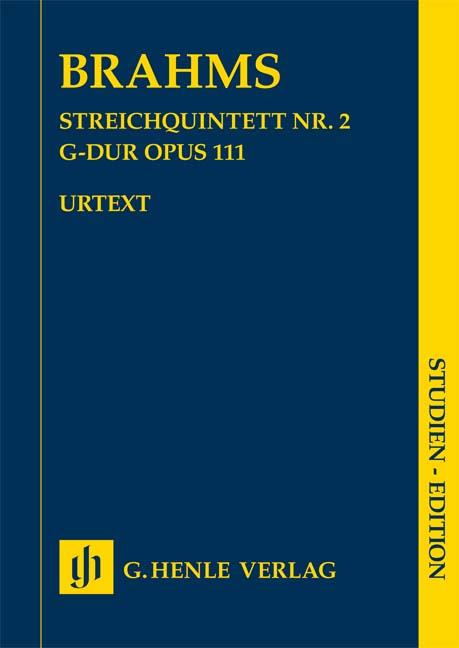
Brahms String Quintet No.2 in G major Op.111 (Miniature Score)
브람스 현악 오중주(스트링 퀸텟) 2번 G장조 Op.111 (미니어처 스코어)
악기 구성
Miniature Scores Chamber 실내악 미니어처 스코어
Kathrin Kirsch (Editor) 카트린 키르슈
Study score (pocket score), Urtext Edition, paperbound
Pages 55 (VIII+47)
Content
String Quintet No.2 G major Op.111 현악 오중주 2번 G장조
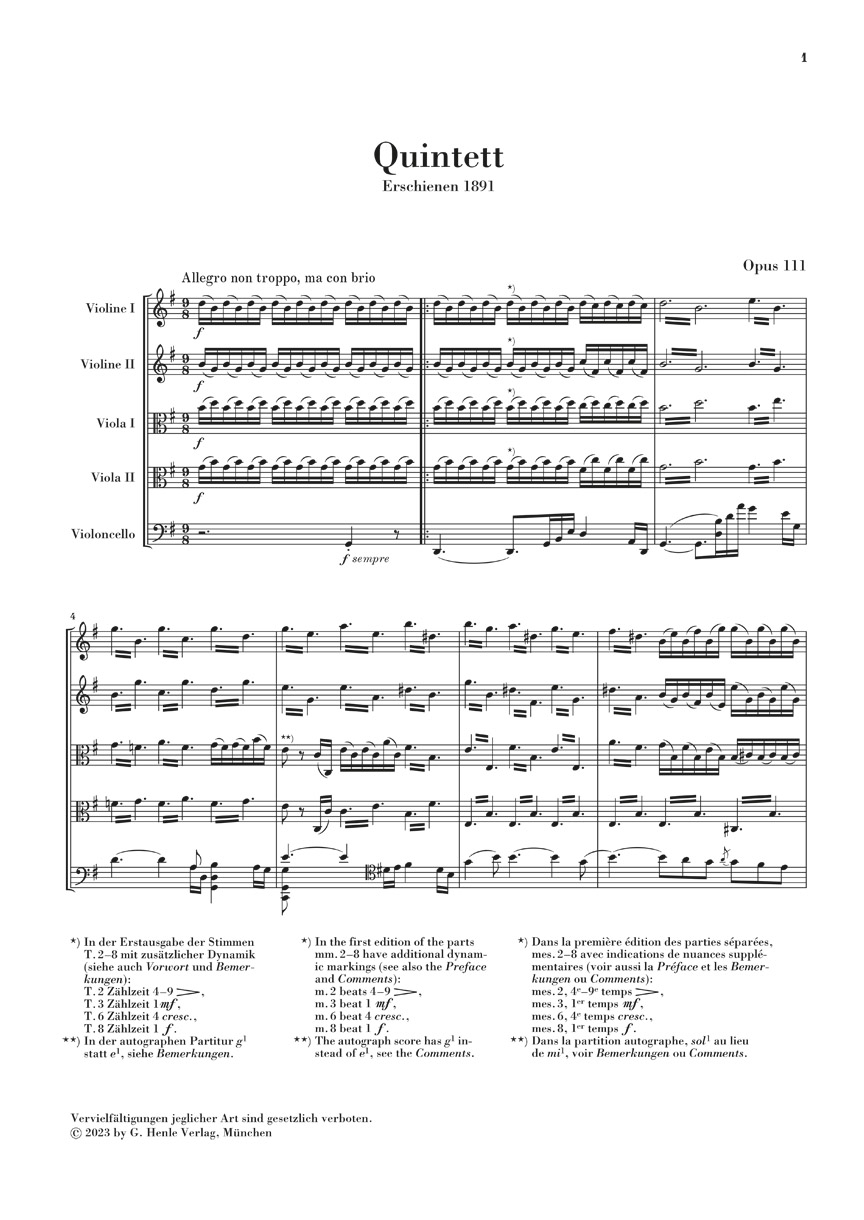
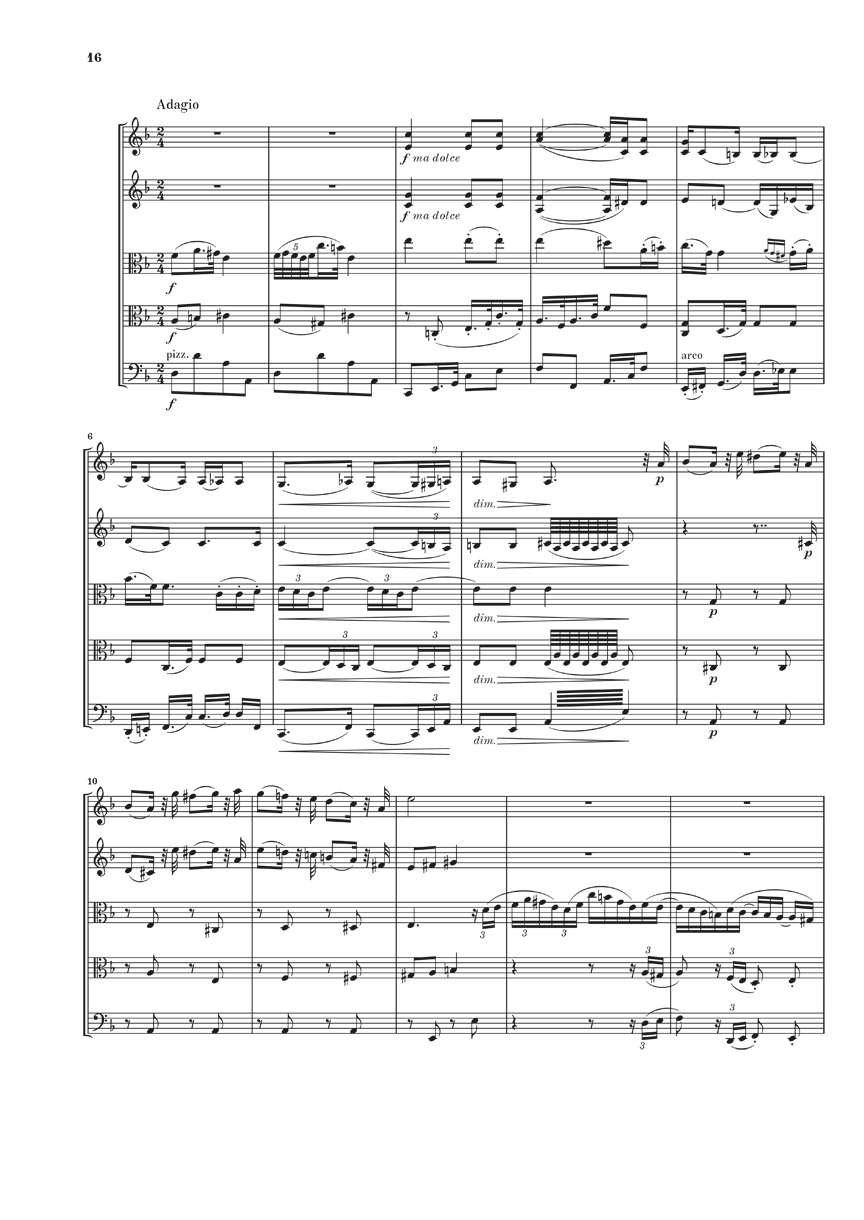
As with its companion work op. 88 from 1882, Brahms’s second string quintet was supposed to be completed in the relaxed atmosphere of a summer in Bad Ischl, but eight years later. The work’s first technical try-out in Vienna in October 1890, which Brahms described to his friend Clara Schumann as “not displeasing”, was followed by a fine-tuning of the work in close dialogue with musical friends such as Joseph Joachim before Brahms sent score and parts to his publisher Simrock at the year’s end. With its at times orchestral texture and stirring, typically Brahmsian rhythms, this cheerful work early on won the hearts of listeners and players alike, despite presenting the latter with some challenges. This new Henle Urtext edition is based on the New Brahms Complete Edition, for which editor Kathrin Kirsch has consulted all the autograph sources and first editions. With an informative preface it offers the best foundation for approaching this jewel of Brahms’s chamber music.
1882년의 자매작 Op.88과 마찬가지로 브람스의 두 번째 현악 오중주도 바트 이슐에서 보내는 여름의 느긋한 분위기 속에서 완성될 예정이었지만, 이번에는 8년 뒤의 일이었습니다. 1890년 10월 빈에서 이루어진 첫 시연을 브람스는 친구 클라라 슈만에게 “나쁘지 않았다”고 전했으며, 이어 요제프 요아힘 등 음악가 친구들과 긴밀히 의견을 나누며 작품을 다듬은 뒤 그해 말 총보와 파트보를 출판사 짐로크에 보냈습니다. 때로 관현악적인 짜임새와 전형적으로 브람스다운 힘찬 리듬을 지닌 이 밝은 작품은, 연주자에게 몇 가지 어려움을 안겨 주는데도 일찍부터 청중과 연주자 모두의 마음을 사로잡았습니다. 이 새로운 헨레 원전판은 신 브람스 전집을 바탕으로 하며, 편집자 카트린 키르슈는 전집 작업을 위해 모든 자필 자료와 초판을 검토했습니다. 유익한 서문을 갖춘 이 판은 브람스 실내악의 이 보석에 다가가는 최상의 토대를 제공합니다.
작곡가 Brahms, Johannes (1833-1897)
에디터 Kathrin Kirsch