Happy Present Meet
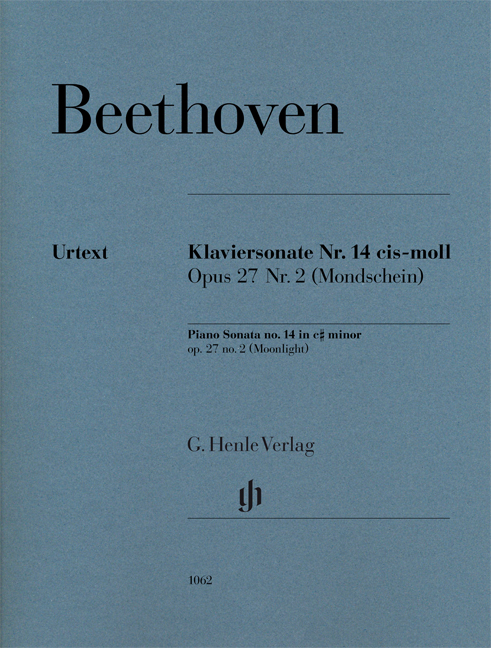
Beethoven Piano Sonata No.14 in c# minor Op.27 No.2 (Moonlight 월광) for Piano Solo
베토벤 피아노 소나타 14번 c#단조 Op.27 No.2 「월광」 피아노 독주(솔로)
악기 구성
Piano Solo 피아노 독주(솔로)
Murray Perahia (Editor, Fingering Piano) 머레이 페라이어
Norbert Gertsch (Editor) 노르베르트 게르치
Urtext Edition, paperbound
Pages 30 (XII+18)
Content
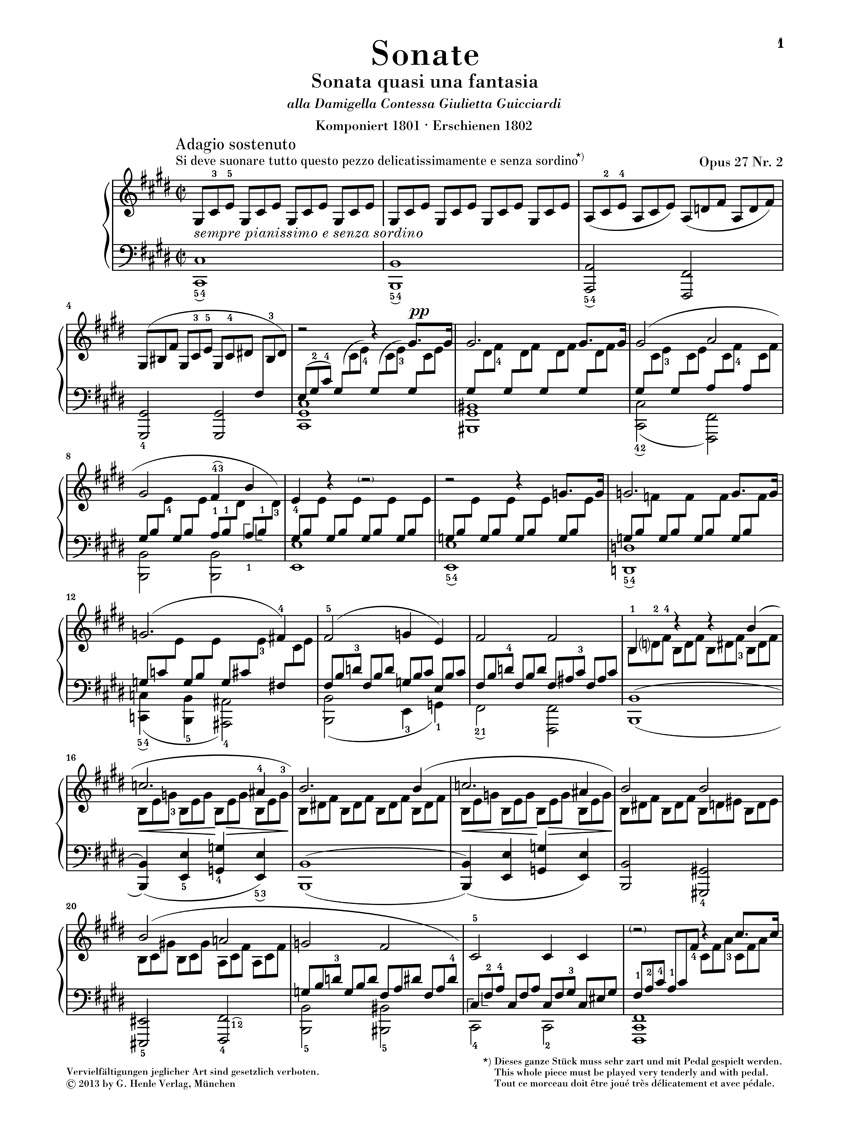
Piano Sonata c# minor Op.27 No.2 피아노 소나타 c#단조 (Moonlight Sonata, 월광 소나타)
7 difficult
“Sonata quasi una fantasia” was the title given to it by Beethoven, and yet the world of music knows it as the “Moonlight Sonata” – an epithet that was already around during the composer’s lifetime. “The lake rests quiet under the light of the moon at twilight; the wave thuds against the dark bank”, wrote Ludwig Rellstab on the 1st movement in 1823. “It is as if we catch sight of a colossal grave in the middle of a lonely plain, palely lit by the sickle moon”, was what Wilhelm von Lenz wrote. Beethoven might have been influenced by the sound of the Aeolian harp, as Murray Perahia and Norbert Gertsch explain in the introductory texts to this edition, referring to the latest research. Perahia also provided the fingerings.
베토벤이 붙인 제목은 「환상곡풍 소나타(Sonata quasi una fantasia)」였지만, 음악계는 이 곡을 「월광 소나타」로 알고 있습니다. 이 별칭은 작곡가 생전에 이미 쓰이고 있었습니다. “호수는 어스름 속 달빛 아래 고요히 쉬고, 물결은 어두운 기슭에 둔탁하게 부딪친다.” 1823년 루트비히 렐슈타프는 1악장에 대해 이렇게 썼습니다. “마치 쓸쓸한 벌판 한가운데, 초승달에 희미하게 비친 거대한 무덤을 보는 듯하다.” 빌헬름 폰 렌츠는 이렇게 썼습니다. 이 판의 해설에서 머레이 페라이어와 노르베르트 게르치가 최신 연구를 인용해 설명하듯, 베토벤은 에올리언 하프의 소리에서 영향을 받았을 수도 있습니다. 운지법도 퍼라이어가 붙였습니다.
작곡가 Beethoven, Ludwig Van (1770-1827)
에디터 Perahia, Murray
Gertsch, Norbert