Happy Present Meet
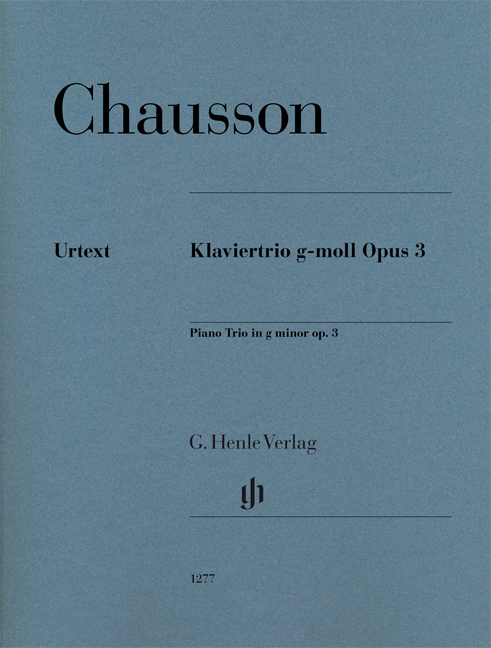
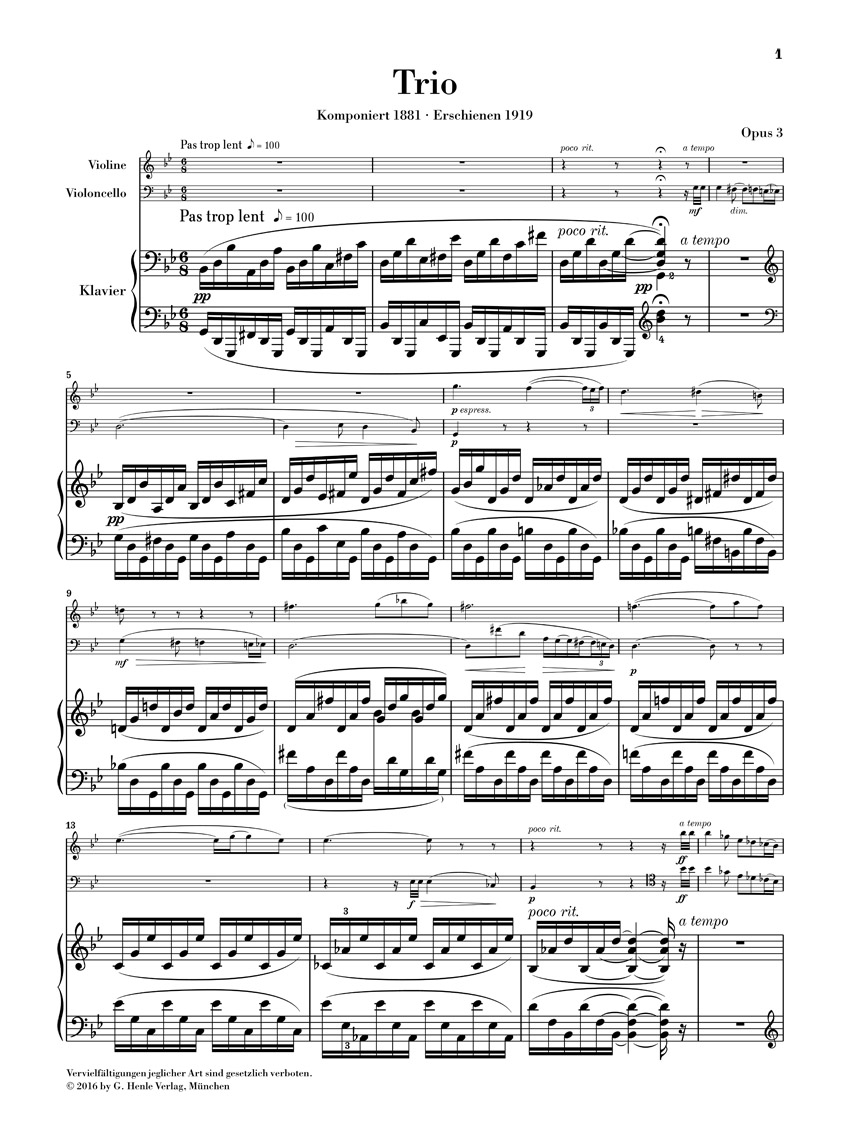
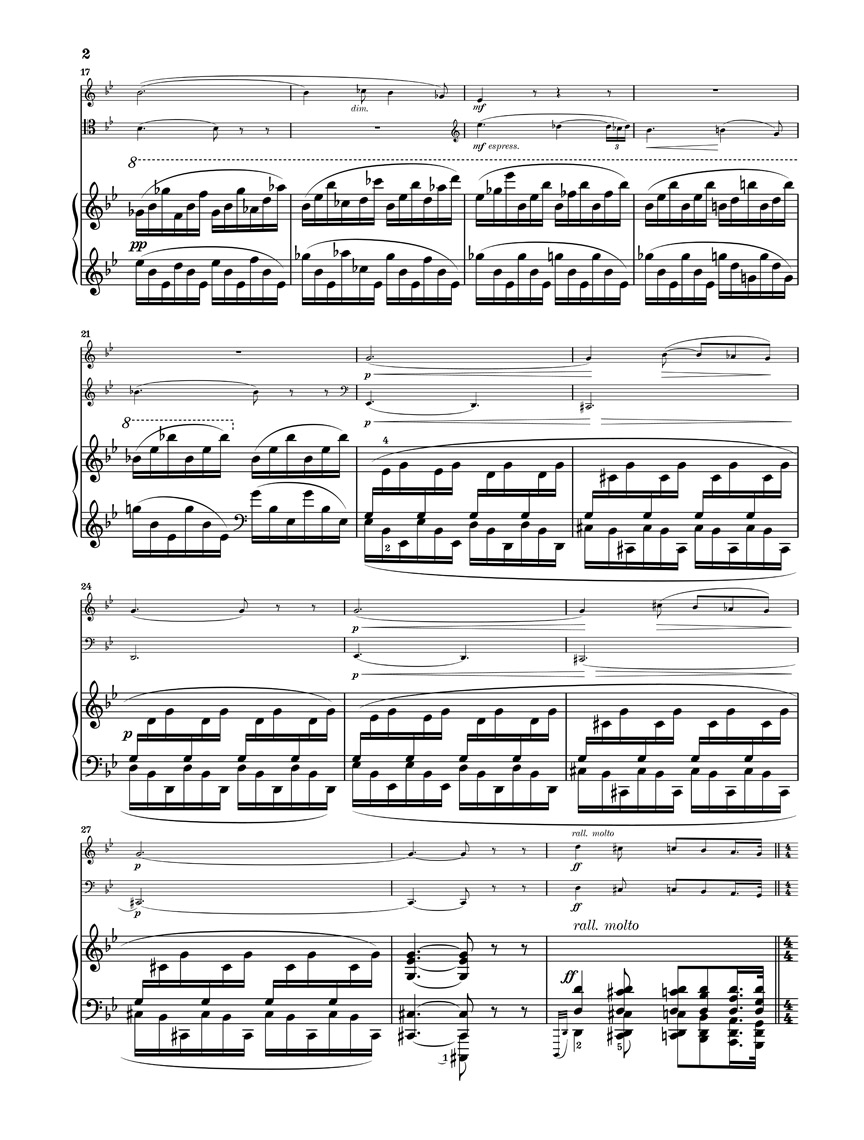
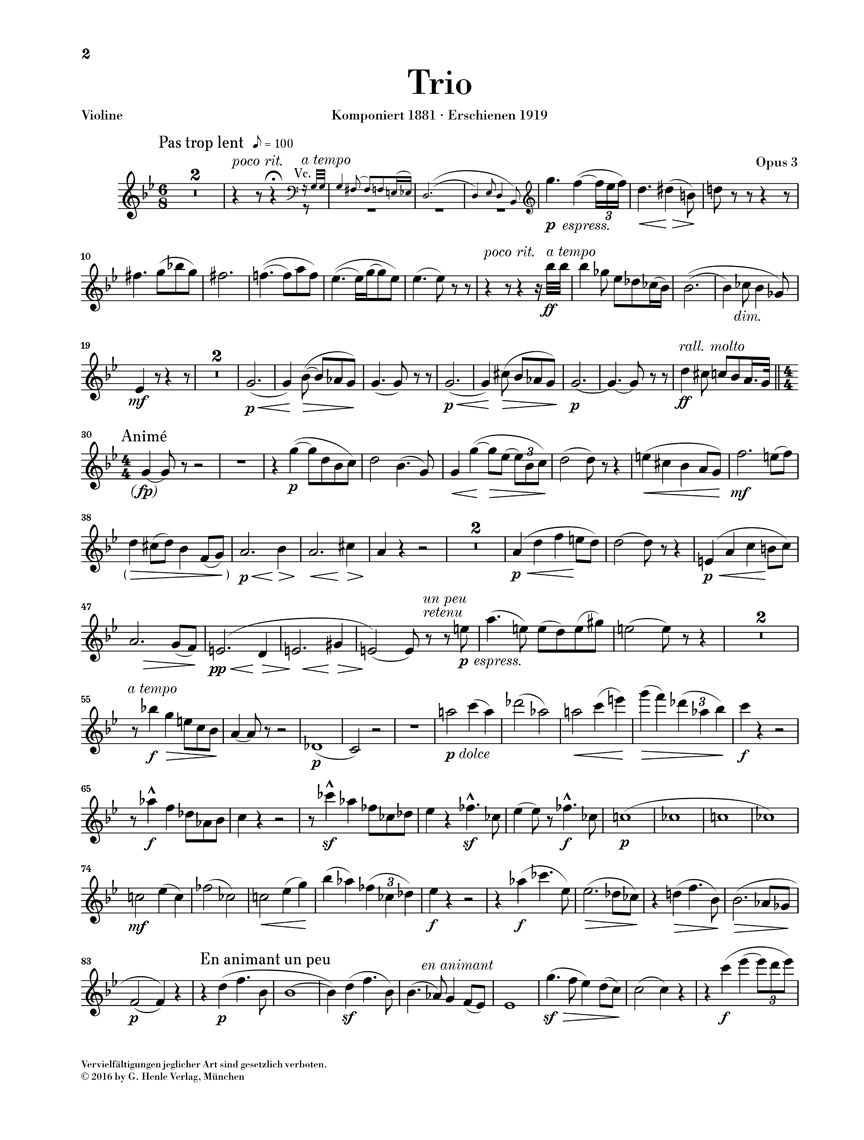
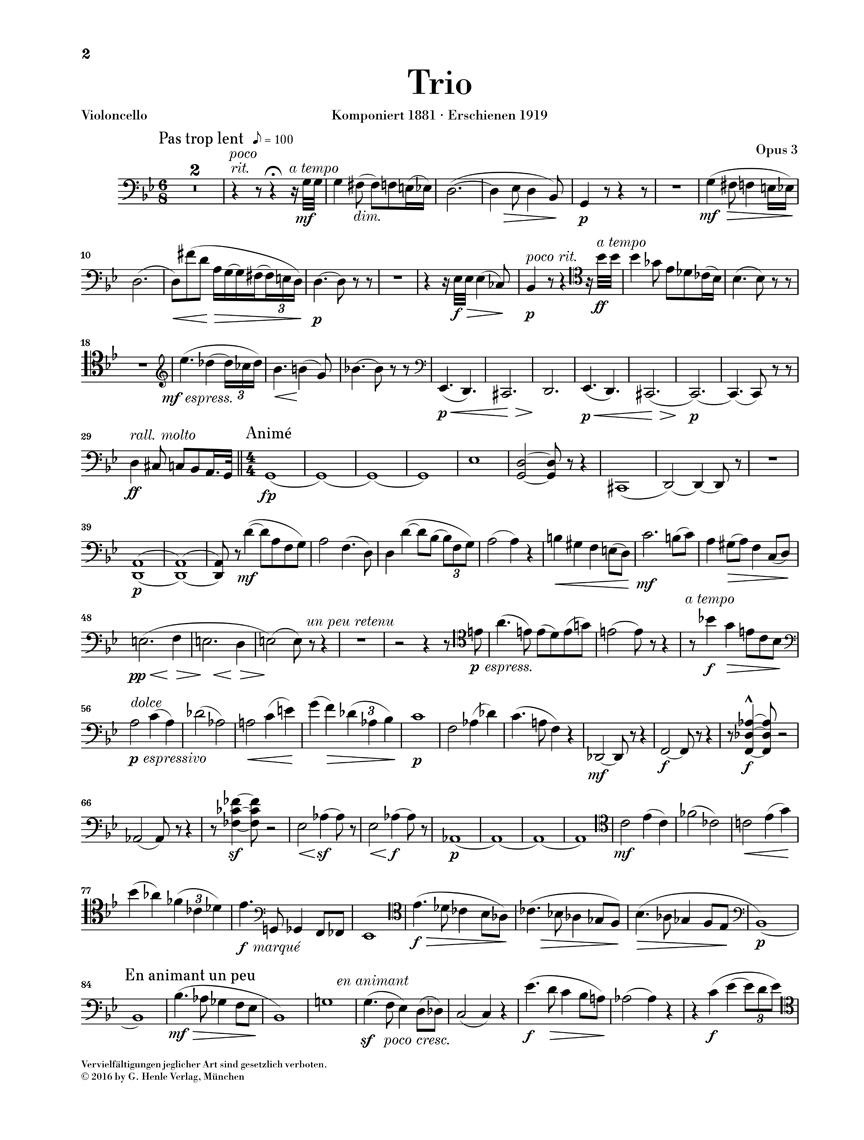
Chausson Piano Trio in g minor Op.3 for Violin, Cello and Piano (Parts)
쇼송 피아노 삼중주(피아노 트리오) g단조 Op.3 (바이올린, 첼로, 피아노)
악기 구성
Piano Trios 피아노 3중주(트리오)
Violin, Cello and Piano 바이올린, 첼로, 피아노
Peter Jost (Editor) 페터 요스트
Klaus Schilde (Fingering Piano) 클라우스 쉴데
Urtext Edition, paperbound
Pages 112 (VI+74+16+16)
Content
Piano Trio g minor Op.3 피아노 삼중주 g단조
Following his early elimination from the “Prix de Rome”, the sought-after award for composition students at the Paris Conservatoire, Chausson withdrew to the country in summer 1881 and began composing this ambitious work – out of defiance, so to speak. During his lifetime the trio remained an insider’s tip amongst those close to his teacher César Franck. It was only after its posthumous publication that it was performed more frequently and was gradually recognized as being one of the best chamber music works of his time. Closely based on Franck’s principle of the cyclic interleaving of all motives, it still has dark and melancholy inflections all of its own. The Henle Urtext edition is the first critical edition and a welcome addition to our collection of French music.
파리 음악원 작곡과 학생들이 탐내던 상인 “로마 대상(Prix de Rome)”에서 일찍 탈락한 뒤, 쇼송은 1881년 여름 시골로 물러나 이 야심 찬 작품을 쓰기 시작했습니다. 말하자면 오기로 쓴 셈입니다. 그의 생전에 이 트리오는 스승 세자르 프랑크 주변 사람들 사이에서만 알려진 숨은 명작으로 남아 있었습니다. 사후 출판된 뒤에야 더 자주 연주되었고, 점차 당대 최고의 실내악 작품 가운데 하나로 인정받게 되었습니다. 모든 동기를 순환적으로 엮는 프랑크의 원칙을 충실히 따르면서도, 이 곡에는 고유한 어둡고 우울한 색채가 있습니다. 헨레 원전판은 이 곡의 첫 비평판이며, 헨레의 프랑스 음악 컬렉션에 반가운 보탬이 됩니다.
작곡가 Chausson, Ernest (1855-1899)
에디터 Jost, Peter