
Happy Present Meet
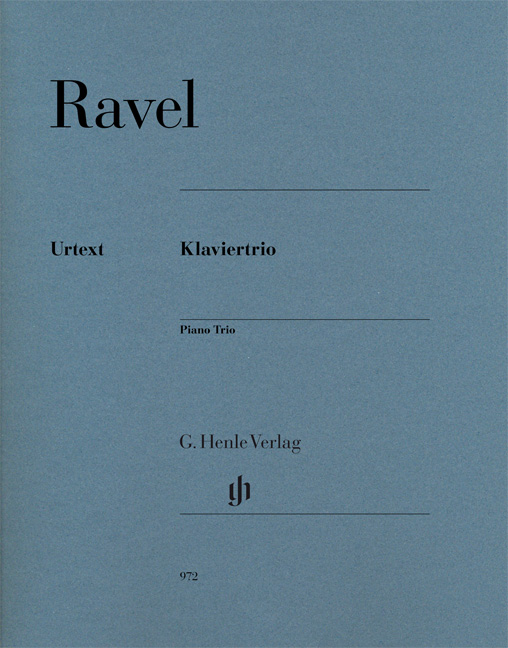
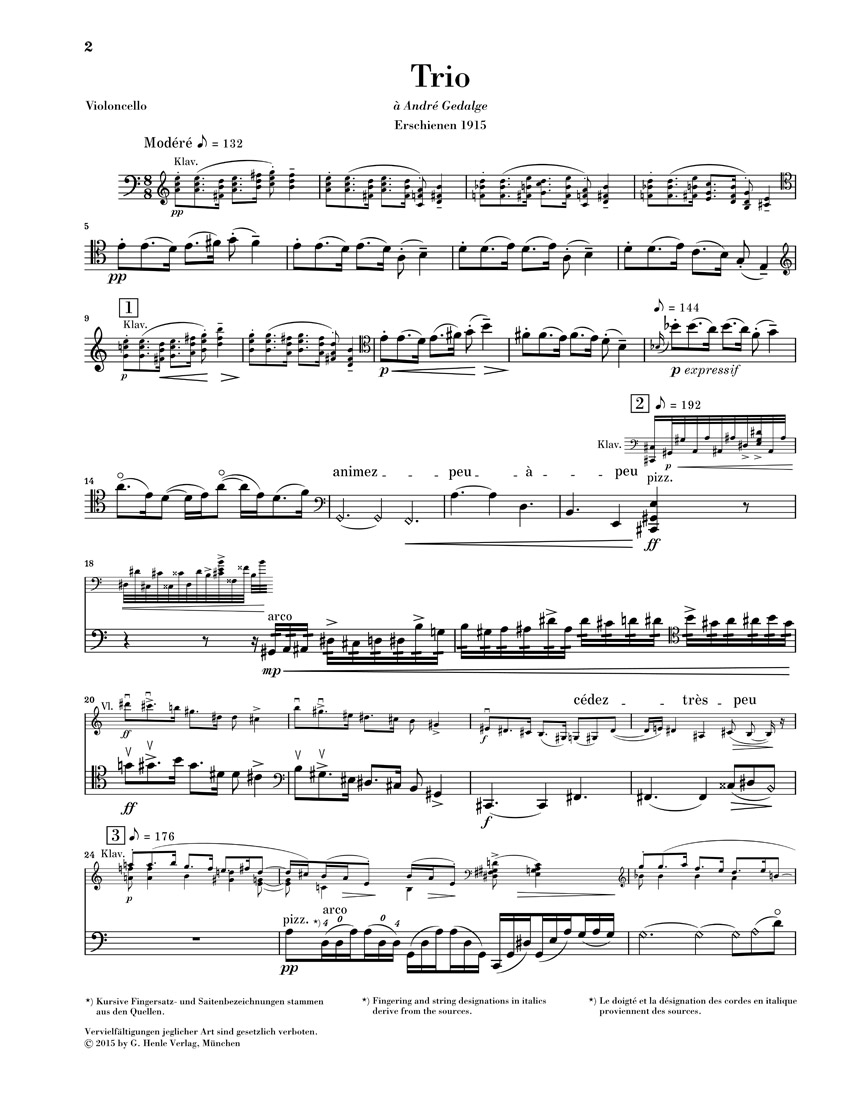
Ravel Piano Trio for Violin, Cello and Piano (Parts)
라벨 피아노 삼중주(피아노 트리오) (바이올린, 첼로, 피아노)
악기 구성
Piano Trios 피아노 3중주(트리오)
Violin, Cello and Piano 바이올린, 첼로, 피아노
Peter Jost (Editor) 페터 요스트
Pascal Rogé (Fingering Piano) 파스칼 로제
Urtext Edition, paperbound
Pages 101 (XII+55+18+16)
Content
Piano Trio 피아노 삼중주
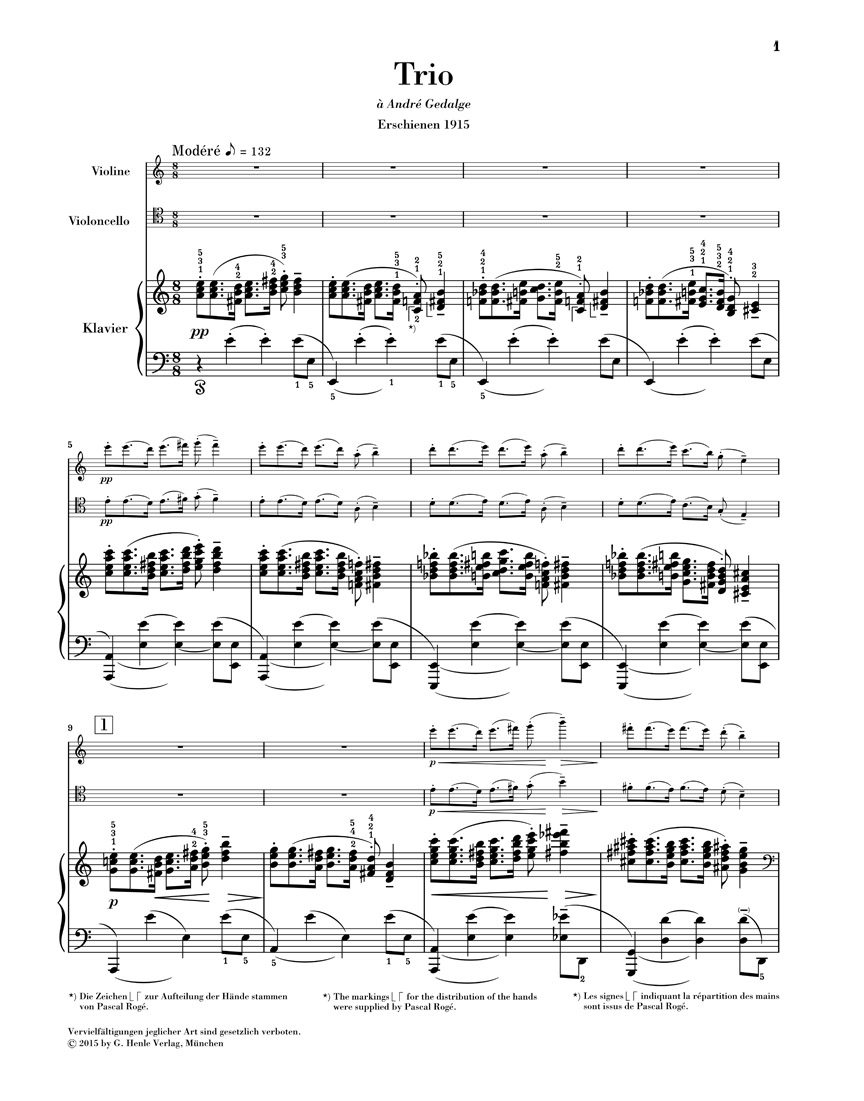
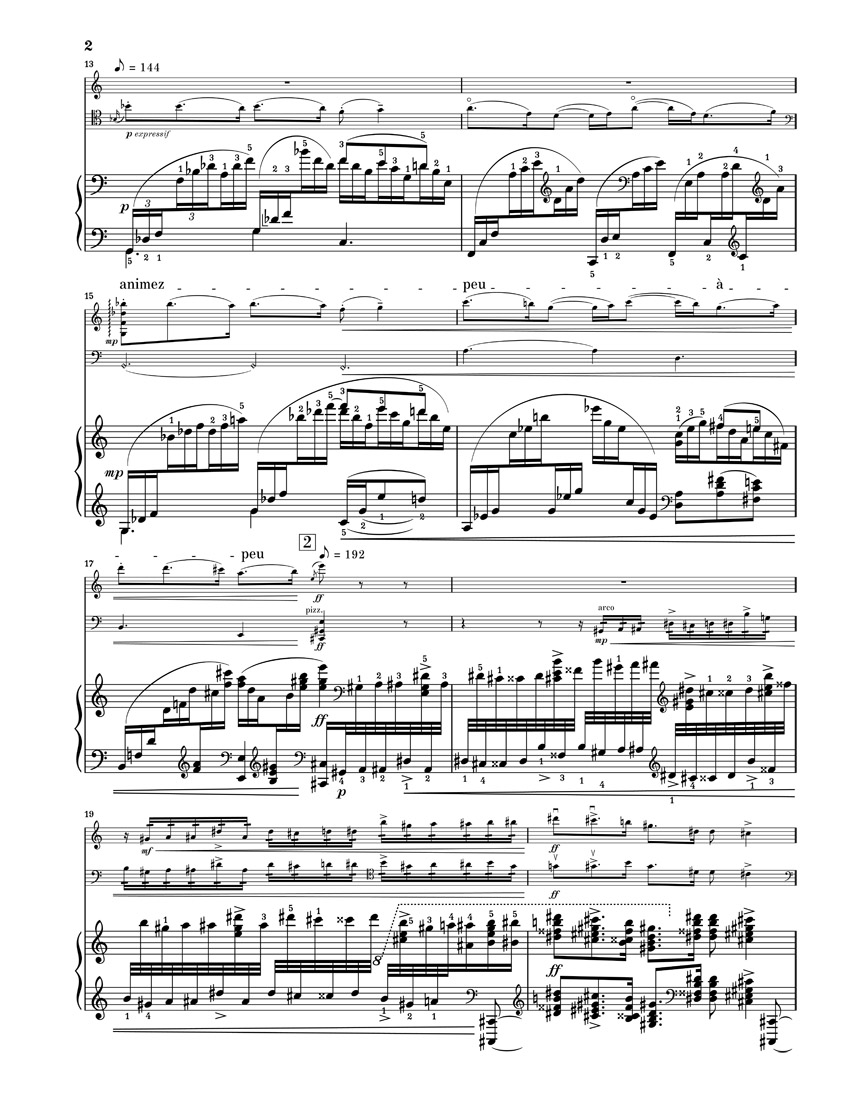
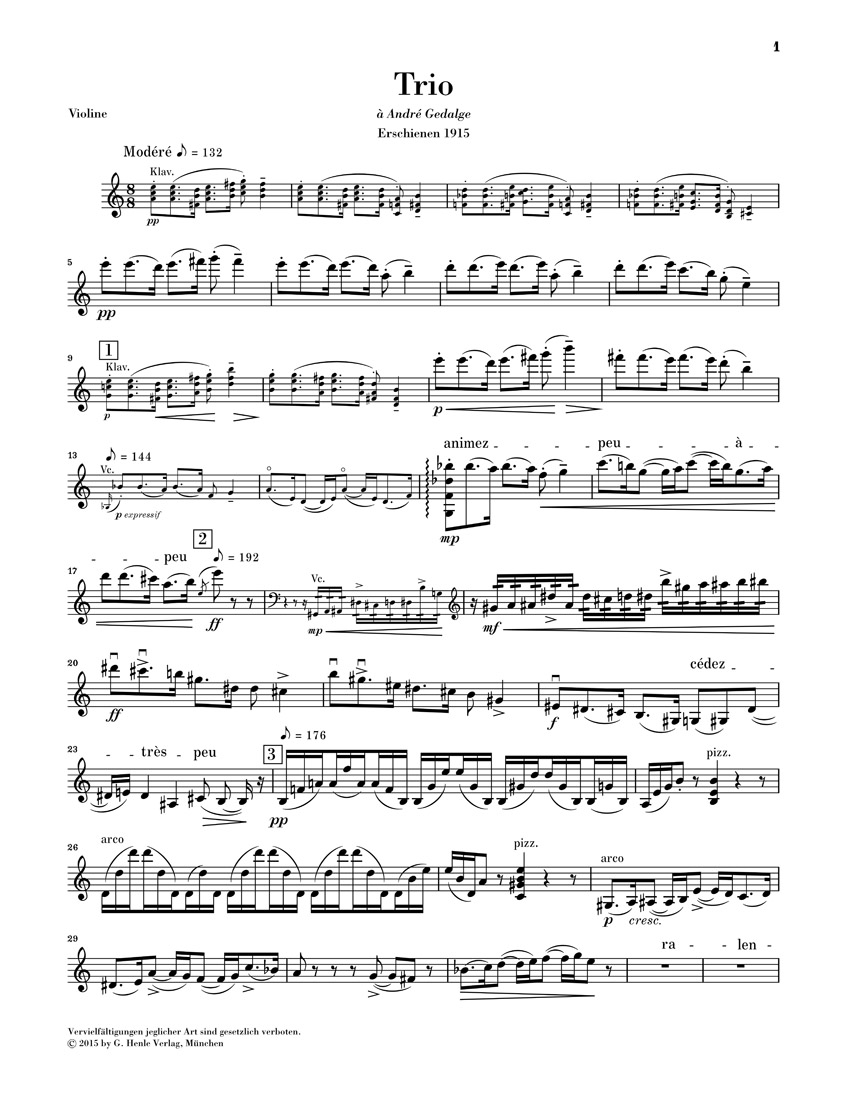
As with all of his mature chamber music works Ravel also emerges as an innovator of traditional forms and techniques in his piano trio, composed in 1914. Thus the “Passacaglia” movement corresponds to the underlying form of the Baroque Period. The music on the other hand was, according to Ravel, “like that of Saint-Saëns”, which was surely meant ironically. For the historicizing template only served as a framework for experiments with musical idiom: from a constant oscillation between major and minor to combinations and overlaying of the most diverse metres. The fingering for our edition of this technically extremely demanding work was provided by the renowned French pianist Pascal Rogé.
라벨은 원숙기의 모든 실내악 작품에서 그렇듯이, 1914년에 작곡한 피아노 삼중주에서도 전통적인 형식과 기법의 혁신가로서 면모를 드러냅니다. 그래서 「파사칼리아」 악장은 바로크 시대의 기본 형식을 따릅니다. 반면 음악은 라벨의 말에 따르면 “생상스풍”이었는데, 이는 분명 반어적인 의미였을 것입니다. 역사적 양식을 본뜬 틀은 장조와 단조 사이를 끊임없이 오가는 것에서부터 매우 다양한 박자의 결합과 중첩에 이르기까지, 음악 어법을 실험하기 위한 뼈대에 지나지 않았기 때문입니다. 기술적으로 매우 까다로운 이 작품의 헨레판 운지법은 저명한 프랑스 피아니스트 파스칼 로제가 붙였습니다.
작곡가 Ravel, Maurice (1875-1937)
에디터 Jost, Peter
Eraser Notes White Dia 1,0*8,7 Cm L (펜슬형 지우개_화이트)
Ravel Trio for Violin, Cello and Piano (Miniature Score)
Smetana Piano Trio in g minor Op.15 for Violin, Cello and Piano (Parts)
Schumann Paganini Etudes Op.3 and Op.10 for Piano Solo
Ravel Gaspard de la nuit for Piano Solo
Mendelssohn Piano Trio No.2 in c minor Op.66 for Violin, Cello and Piano (Parts)
Medtner Sonata No.2 in G major Op.44 for Violin and Piano
Medtner Sonata No.1 in b minor Op.21 for Violin and Piano
Medtner Sonata Epica No.3 in e minor Op.57 for Violin and Piano